Author Archives: Jenny Chandler

Unknown's avatar

About Jenny Chandler

I am a food writer and cooking teacher

Coco – the crème de la crème of beans

Last week the wonderful Charlie Hicks dropped off a calico bag of the most amazingly creamy beans that I’ve ever tasted. Now, I’ve been a fan of semi-dried, or what the Americans call “shelling beans” for years. These beans are left on the plant until fully matured and beginning to dry. Their season is from late summer into early autumn so we’re really at the close- snap ’em up if you can or you’ll have to wait until next year.

When I was in my twenties I cooked on a very glam’ Italian yacht and the guests used to go bonkers with excitement at the beginning of the borlotti harvest and soon I loved them too. Last summer we spent a couple of weeks in Calabria and despite the fact that there were dozens of wonderful little restaurants and beachside lidos serving up zippy, chilli-fueled dishes I just couldn’t resist cooking some of the stunning pink-speckled borlotti from the market. Shopping was the first job of the day before the searing August heat set in and bean-podding made a change from the children’s other holiday job of making fresh lemonade. Podding was safer too; we only discovered that the lemon tree (that we’d encouraged the kids to climb) hung precariously over an 80 ft drop, on the last day of the holiday. What a way to go, plucking a lemon for your Dad’s G&T.

My way with borlotti is an Italian classic. You fry up some diced pancetta (unsmoked bacon will do), onion, celery and carrot and once your “soffritto” is meltingly soft then throw in the beans. Give them a stir and cover with water, or stock, and add a few herbs (such as rosemary or thyme) to the pot. Simmer until the beans are tender and then season, toss in some fresh tomatoes and some tiny pasta shapes. Cook until the pasta is ready. Heaven. (You can find a more detailed recipe in my book PULSE)

But now to the white beans. In Calabria I found fagioli a burro (Italian butter beans – not related at all to what we know as butter beans) and they were indeed pretty buttery in texture. It was about 40°c and so I made a really simple salad- in fact it was so hot when we decided to prepare my beans that Imi and I had to sit in the paddling pool to keep cool whilst we podded. I’ve cooked cannellini from the pod too, as well as delicious Spanish pochas, but until last week I was a coco virgin.
Coco beans

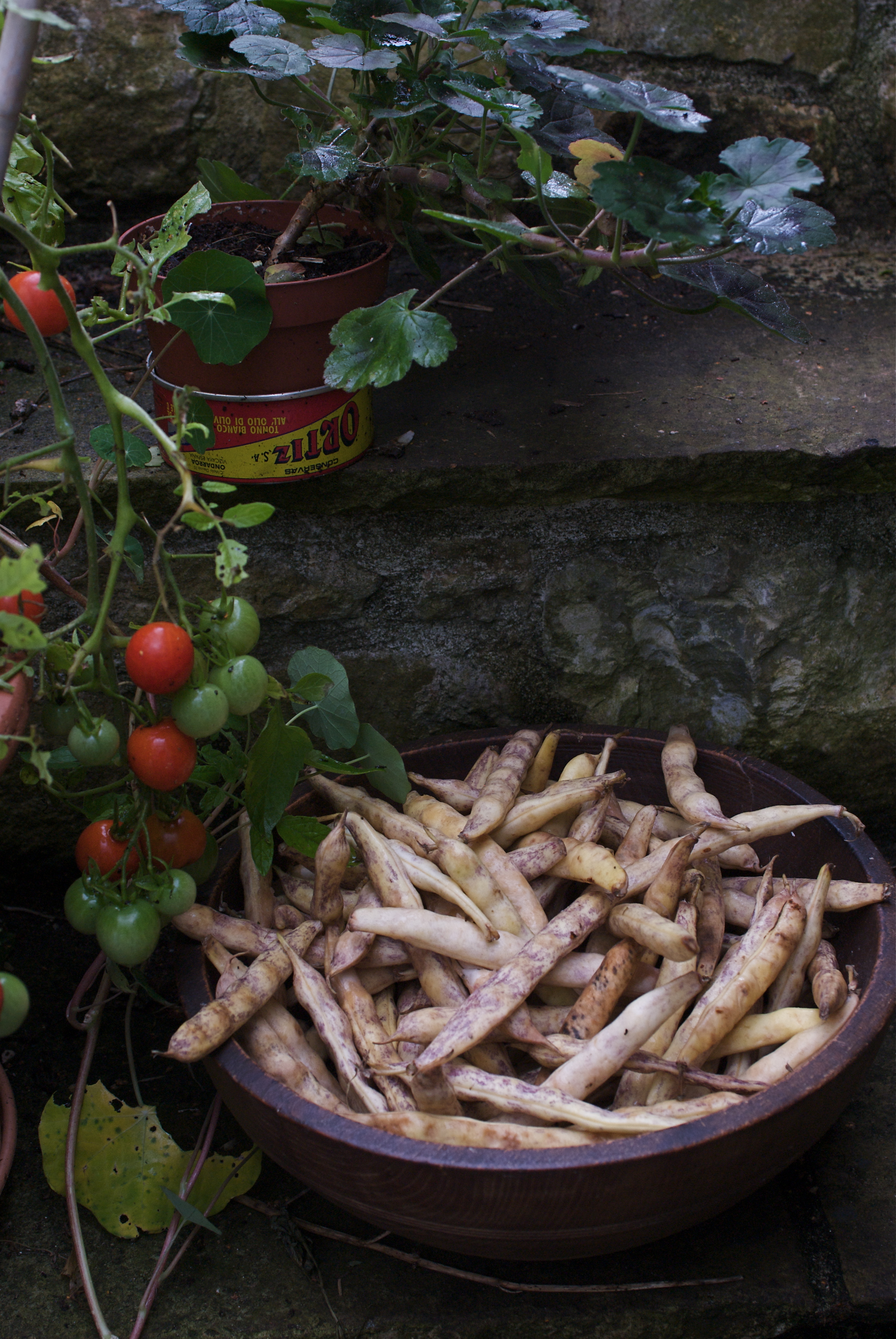
I have to admit that the Breton coco bean, or Coco de Paimpol to be precise (it has it’s own appelation d’origine contrôlée), is not much to look at in its pod – no flashy pink, just a rather mottled violety-beige, but it pops from the pod, glistening white and shiny. If the borlotti deserves Italian fashion status with it’s Missoni-esque markings then the aptly named Coco surely should be hailed as the pure chic, French Chanel.

The texture of the cooked coco is exceptional, Charlie tells me that they have been referred to as beany ganache, well it’s no surprise. These are the most melt-in -the mouthy legumes that I’ve ever experienced and that’s coming from someone who has spent a couple of years researching a book on pulses.

So what to do with them? …I kept it very simple.

Cover the beans in water, throw in a couple sage leaves and chop up a few fresh tomatoes (I picked the last few of our homegrown) Simmer the beans until tender and then season with salt.

We ate some of our beans hot with plenty of extra virgin olive oil alongside our monthly treat of rump steak (from our meat box). The remainder were shared with Sasha the fruit fairy up the road, and eaten as salad with some finely diced shallot, parsley, extra virgin olive oil and red wine vinegar.

I’m waiting for the 2014 Paimpol coco season already. You may have to badger your green grocer to track some down but do, the coco is honestly the crème de la crème of beans.

My alternative 5:2 diet with some Sobrasada thrown in.

Last week’s trip to London was a lightning fast, belt-tightening business. I’m afraid that the tightening was not of a budgetary nature,  more a matter of waist expansion. I went on the opposite of the 5:2 diet (which, if any of you have somehow managed to miss all the hype, revolves around five days of “sensible” eating and two days of fasting each week) I think I managed to pack in about 5000 calories rather than the terrifyingly meagre 500 allowed on each of my 2 days. I must be taking Graham Norton’s very sensible advice that there comes an age when you decide between your face or your buttocks. A couple of my fasting friends are looking positively peaky even if they do have waspish waistlines.

The National Express coach left Bristol at 5.45 am ; how very glamorous! This could bring on a rant about train prices, as I just can’t part with well over £100 (I need to arrive by 9 am) for the pleasure of squeezing onto a packed train to London and back. People tend to be terribly snobby about the bus, but I take a different view. By the time I get to London I’ve saved myself over £90 which I can then blow on cook books, crockery, cheese or whatever else I decide is a vital business expense, all without an ounce of guilt.

I kicked of with a Pulse demo at Divertimenti on Marylebone High St, which was great fun (well, I thought so) and afterwards had some heady excitement signing books (it does still seem very odd that anyone should want my signature), although my line-up was rather more bus-queue than Katie-Price-stampede. I munched my way through a good plate of my legumes, quality control of course, and then jumped on a double-decker bus to Notting Hill – I love that front seat at the top, it still makes me feel like a sightseer.

First stop my favourite book shop in London, Books for Cooks. If you haven’t been, you should go for lunch one day. Eric, Clara and Marilou cook up a fabulous feast from the books they stock in the shop (meaning that they’re super-clued up when it comes to recommending what to buy too). You can’t book so rock up by midday if you want to be sure of a table. Of course I had to buy something; this time it was Bruno Loubet’s truly inspiring Mange Tout.

Virtually next door to Books for Cooks is Ceramica Blue, where I’ve found my most exciting bits of crockery, napkins, aprons and all those other essential bits over the years. The danger is that, with blog pictures to take, I have yet another reason to squeeze even more plates into my cupboards. For once I was incredibly restrained and managed to leave the shop with a couple of funky acrylic spoons, a turquoise bowl and an apron depicting all the classic meat cuts  (just incase, with all the pulse talk, anyone thought I was a vegetarian).

Next I discovered the very novel Biscuiteers, yes, you guessed it – a biscuit shop but “this is no ordinary” biscuit shop if there is such a thing. I felt like the sugar-plum fairy stepping into in a pink candy palace, even the lady behind the counter looked like a doll. These are biscuits for the Caviar Set, who else could possibly snap up a small tin of exquisitely hand-iced safari animals costing almost £40? You can even treat your pampered pooch to a few personalised dog biscuits . I couldn’t resist a lone lobster for Imi (it was fabulous before I crushed it in my handbag), and was helpfully advised that she could come along and decorate her own biscuit for £10! Extraordinary. It’s another, admittedly very beautiful, planet.

Ok I’m rambling now, so I’ll try more pictures and less words (oh and these pics are all ipad snaps as I couldn’t face hauling my camera around London). So here’s the menu from Bruno Loubet’s Grain Store, where I ate a very tasty dinner with my old mate Stephen. I’ve dropped my food photos as it was rather dark, so dark in fact that I could barely read the menu. It’s by no means a vegetarian restaurant but the vegetables really do shine. Highlights: the sprouting beans with miso aubergine and crispy citrus chicken skin and the rather unlikely horseradish ice cream with nasturtium leaves and a strawberry and balsamic jam.

Up early the next day for breakfast at Honey & Co on Warren St. I’ve been dying to eat there for ages, next time it will be dinner, I love the place. The Middle Eastern savoury pastries looked fabulous but I knew that I had a day of tasting ahead so I plumped for the, oh-so-much-lighter option of toasted fig, walnut and orange loaf with marmalade. Heaven.

On to Borough Market where I had planned a bit of a recce around the stalls in preparation for my debut demo there next week. The highlight was a tasting session at Brindisa, the Spanish food specialists – it was like winning Willy Wonka’s golden ticket, munching my way through piles of amazing charcuterie and cheese. The Ibérico ham was exquisite of course but I made a couple of new discoveries too. The Grazalema sheep’s cheese from Andalucia looks rather dry and unexciting but bursts into caramelly-nuttiness in your mouth, it may have become my desert island cheese. The other exciting find is the Ibérico sobrasada, a kind of spreadable chorizo that’s fully cured so you can eat it like a pâté. Some of the traditional Mallorcan sobrasada seems very greasy to me, and there’s no denying that sobrasada loaded with pork fat but this one is balanced and very, very tasty. Try to track some down, you may have to buy it online but it has a long shelf life, it’s great stirred into a bowl of lentils, stuffed into a chicken or just eaten on toast. Calabrian N’duja is a similar, spicier porky paste that’s worth looking out too.

Just before I leapt, or rather crawled, onto the tube to catch my bus home I did spot my mate Roman and definitely got a stare from a couple of his heavies when I snapped a shot of him. The things I do for you.

I’ll leave you now, after a very long post with a very quick recipe from my book. It works  perfectly with a spot of sobrasada on the top.

Cheat’s creamy bean crostini
1 x 400 g/14 oz tin of cannellini, haricot or flageolet beans, drained
2 cloves garlic, roughly chopped
4 tbsp extra virgin olive oil
juice of 1/2 a lemon
a pinch of salt and pepper
Optional : a few leaves of  parsley, basil of marjoram.
A few slices of toasted baguette

Whizz the lot up into a puree in a food processor or with a stick blender and then adjust the seasoning until you are happy. The creamed beans will be subtle but need to be balanced all the same.

Put a tablespoon of puree on each crostini, pop on a leaf or 2 of your chosen herb and then top with a teaspoon of sobrasada, harissa, tapenade, pesto or salsa verde.

Roasted Figs with Pomegranate Molasses

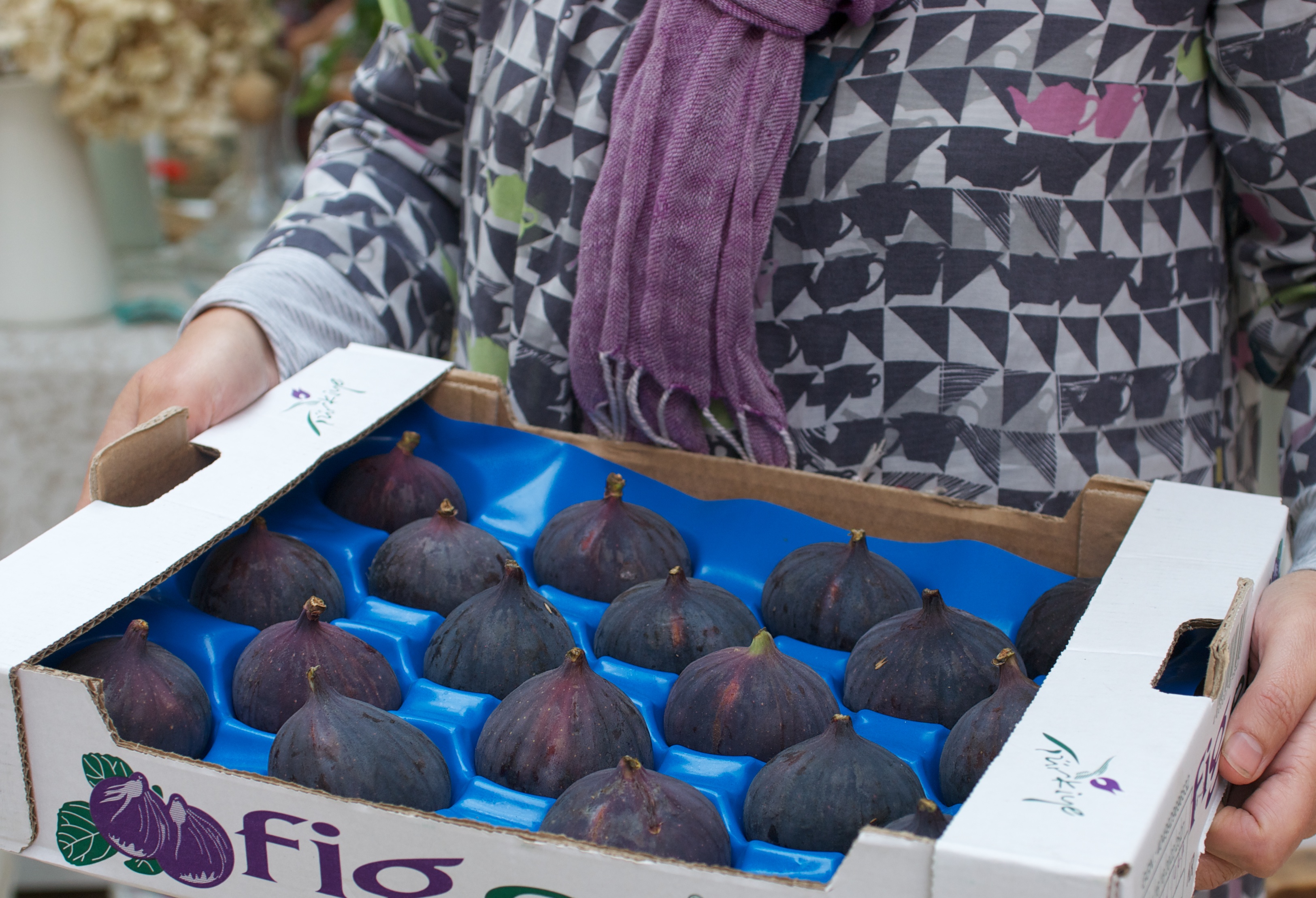
Sacha's fresh figsToday’s recipe comes from the magical Mr Ottolenghi via a fabulous blog called Milli’s kitchen. The fruit fairy (our lovely neighbour who drops in random boxes of fruit on a Sunday morning – I know I’m blessed!) had left me a beautiful tray of figs this weekend and I immediately thought of Milli’s post. Blogging has transformed the way that people pass on recipes, I’m still amazed by everyone’s generosity (as long as they credit the original source). When I first started cooking professionally I worked for an Italian family on their very chi-chi yacht and was sent to learn a few family favorites from their home cook. It was like extracting blood from a stone, the old bag was not going to part with any of her crowd-pleasers (she probably even sabotaged the recipes she gave me) and I think this was often the way in the past. I know everyone loves to be nostalgic about recipes being handed down through the generations. I have to say it depends on your heritage; I’d rather be cooking Mr Ottolenghi’s fantastical figs than my mother’s (sorry Mum) rather hefty cheese and potato pie.

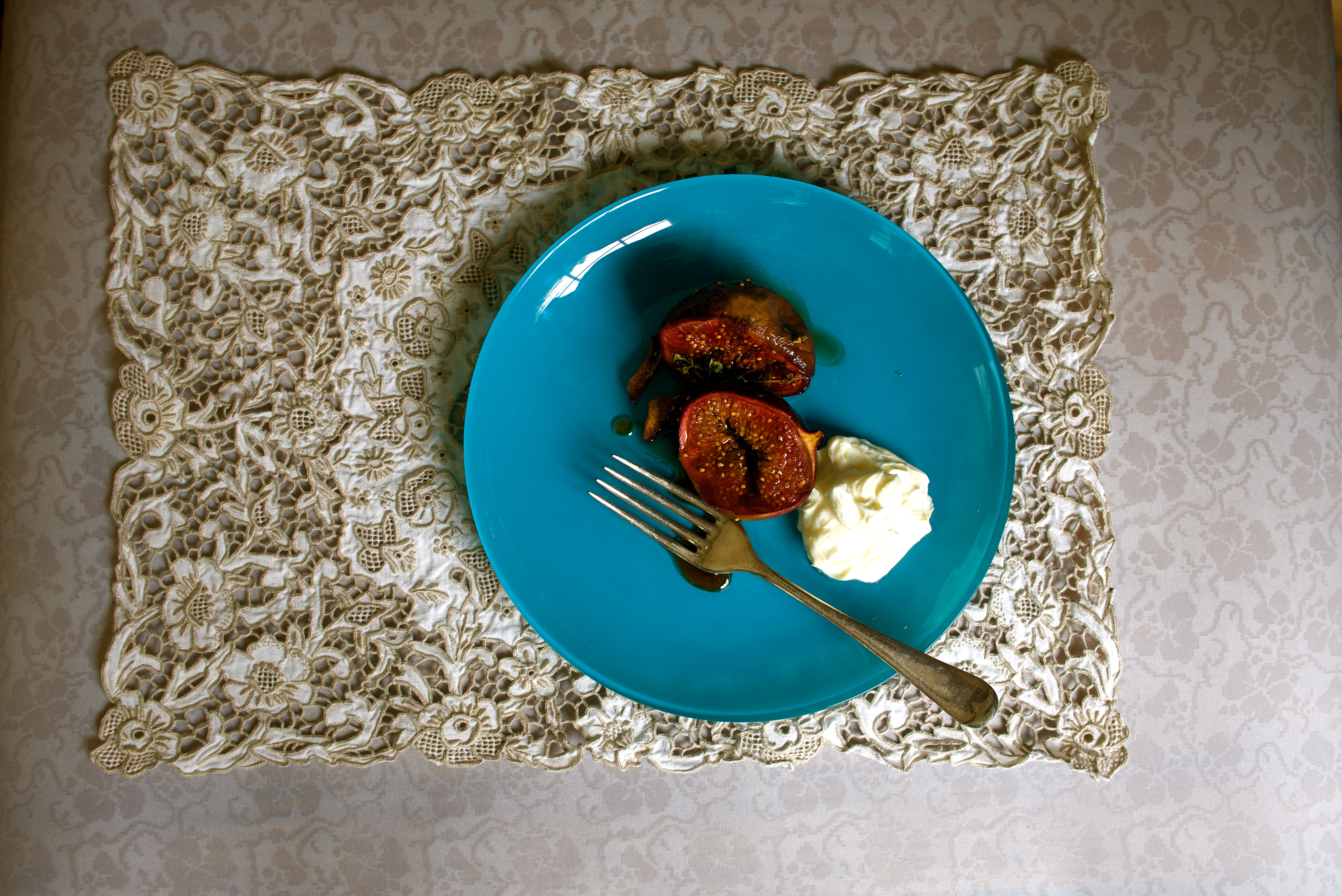
Roasted Figs with Pomegranate Molasses and Orange Zest

I have been terribly lazy today, quite literally lifting this recipe from Milli’s blog, it did seem a bit of a waste of time to re-type the whole thing.  Sometimes the “Chinese Whisper” effect can enhance a dish, with each cook adding or adjusting but this is SO delicious that I wanted to leave it as is. Oh, and that makes me think of my joke of the moment (not mine at all, some fab comic’s at The Edinburgh Festival) “There’s a rumour that Cadbury’s are developing a new Oriental chocolate bar…….could be a Chinese Wispa” boom, boom! Well, it appealed to my very childish sense of humour.

Figs with Pomegranate molasses


3 tbsp of pomegranate molasses
1 tbsp of lemon juice
3 tbsp dark muscovado sugar
4 thyme sprigs
skin of 1 orange, in strips
8 fresh figs, cut lengthways
100g mascarpone
100g yogurt
icing sugar
pinch of salt

Put together in a large mixing bowl the pomegranate molasses, lemon juice, 1 tablespoon of the sugar, 2 thyme sprigs, 1 tablespoon of water, the orange skin strips and a pinch of salt. Mix well to dissolve the sugar and then stir in the figs. Set aside to marinate for 30 minutes.
Meanwhile, whisk together in a small bowl the mascarpone, yoghurt and icing sugar until smooth. Keep chilled.
Remove the figs from the bowl (keeping the marinade) and arrange them snugly inside a small baking tray, roughly 20x20cm, the cut side facing up. Sprinkle the figs with the remaining sugar and put under a hot grill, clearing about 15cm from the grill. Grill for 10 minutes, or until the sugar has caramelised and the figs softened.
Meanwhile, pour the marinating liquids into a small saucepan, bring to the boil and then simmer for 2-4 minutes or until the sauce is reduced by half and has a consistency of runny honey.
Transfer the hot figs to serving plates and spoon over any leftover syrup from the baking tray, then drizzle over the sauce reduction and sprinkle with picked thyme leaves. Place a spoonful of the yoghurt cream on the side or on the figs and sprinkle over the remaining orange zest. Serve at once.

And, before you groan about hard-to-track-down ingredients I’ll give you plenty more ideas for using the pomegranate molasses in the next few weeks (and it’s readily available in what Imi always refers to as the “orange supermarket” yes the one with the S)

Just one more thing….food blogs aren’t only about sharing recipes. I came across Milli’s blog after seeing her Pug cake yes, you read it right and finished up, by way of admiring an avocado tree on another post, finding out about her parent’s amazing B&B near Malaga. Now I’m going to tell you more, oh yes so much more, about Rancho del Ingles in another post. In fact I would LOVE to run some cooking courses there, so watch this space. For now I’ll leave you with a few pictures; just a little taster.

Pulse – a sneaky preview

I promised you a few images from the book, so here they are. I hope they’ll give you the gist of what this latest tome is all about. I want to share my love for legumes, I really do think that they’re one of the most satisfying and delicious ingredients in the kitchen. It’s not about persuading you to eat them because they are incredibly healthy, economical, sustainable, easy to cook and infinitely versatile (obviously quite a few bonus points too) it’s all about how very, very tasty they are. Pulses have at last emerged from their tie-dye teepee, so ditch all those hippy preconceptions and dive in.

I can think of nothing better than tucking into a slow-roasted shoulder of lamb with flageolet beans or some roasted autumnal roots with chickpeas and pomegranate molasses. Yes, it’s all about comfort today; it’s peed with rain all afternoon, I’ve had my SAD lamp on next to the desk it’s been so dark and desperate.

Tarka Dal - Pulse

Dahl is one of my favourite simple supper dishes. You can serve it alongside a curry but I’m just as happy to eat it alone with a bowl of rice or an Indian flat bread. Stir a spicy Tarka and a few spinach leaves into the dahl at the last minute and it’s fabulous. I’m not a veggie but I could happily eat this at least once a week.

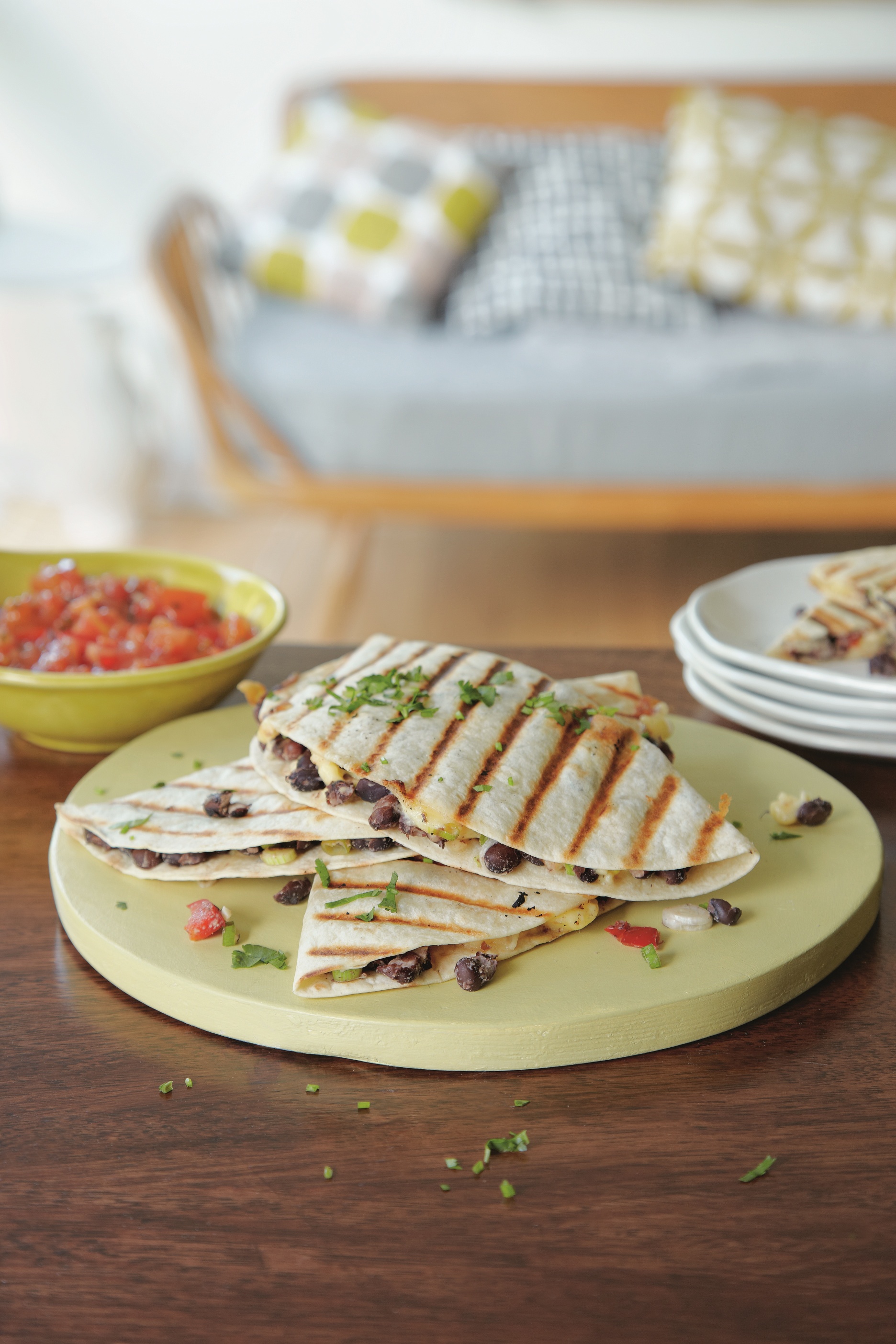
Black Bean QuesadillaBlack bean quesadillas are really quick to make especially if you use tinned black beans but I must encourage you to boil up a big pot of beans and then use them for a selection of recipes, vary the dishes enough and no one will ever notice that they’ve eaten the same bean three times in one week ( you can freeze any left over beans too). So take black beans for example: you could have Mexican quesadillas on monday, followed by black bean, squash and sweetcorn soup on wednesday and indulge yourself by making black bean brownies for the weekend.

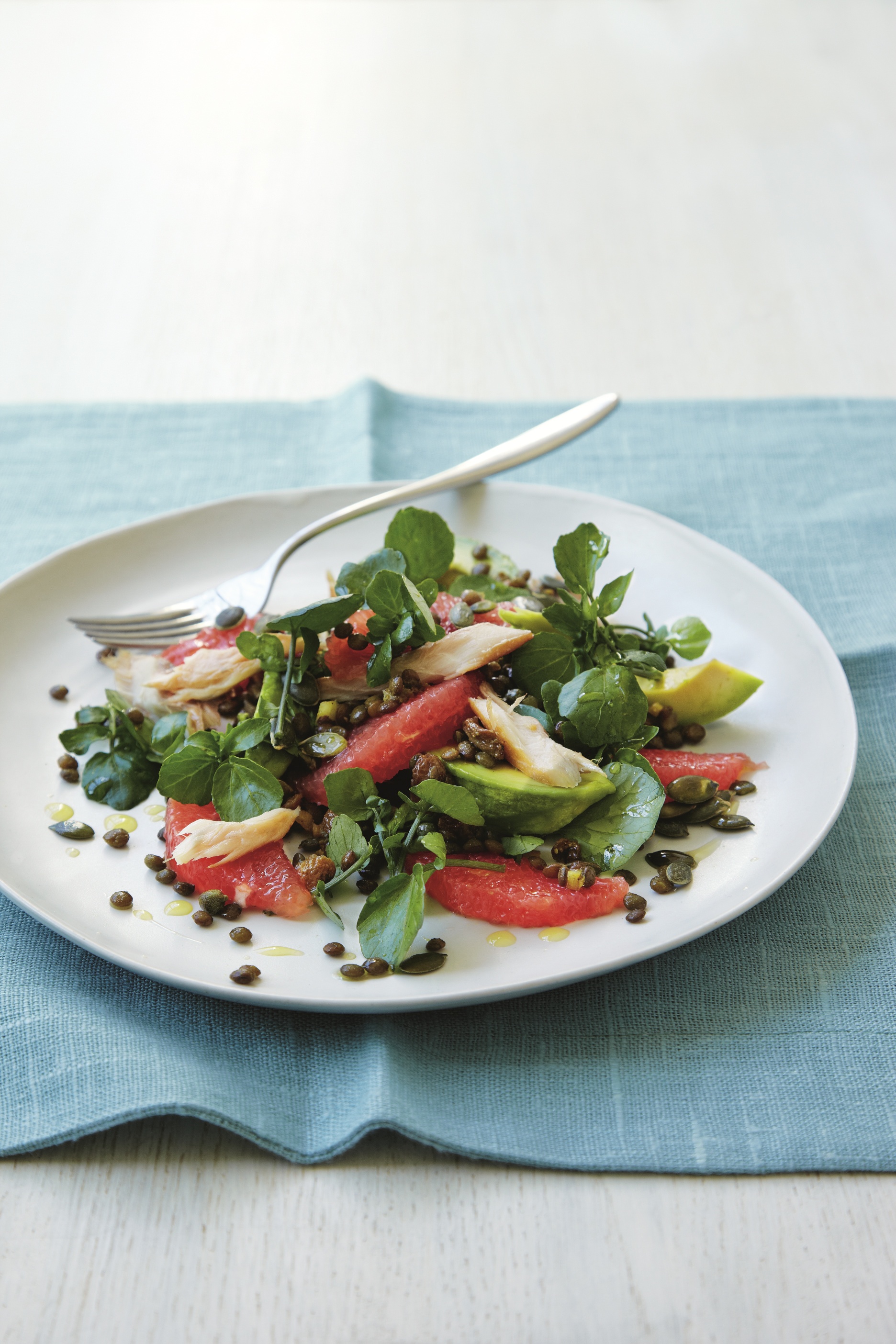
Smoked mackerel., grapefruit and lentil salad

I prepare lentil salads year-round, you can top them with whatever’s in season. This smoked mackerel, grapefruit and lentil salad is a wonderful, zippy winter salad. It’s great when your feeling a bit sloth-like and sluggish because it’s packed with vital vitamins and omega 3. There are plenty of other legumey salads as well. They’re particularly good for lunch boxes; where a leafy salad wilts a pulse just soaks up the juices and develops in flavour.

Moroccan chickpeas with meatballs

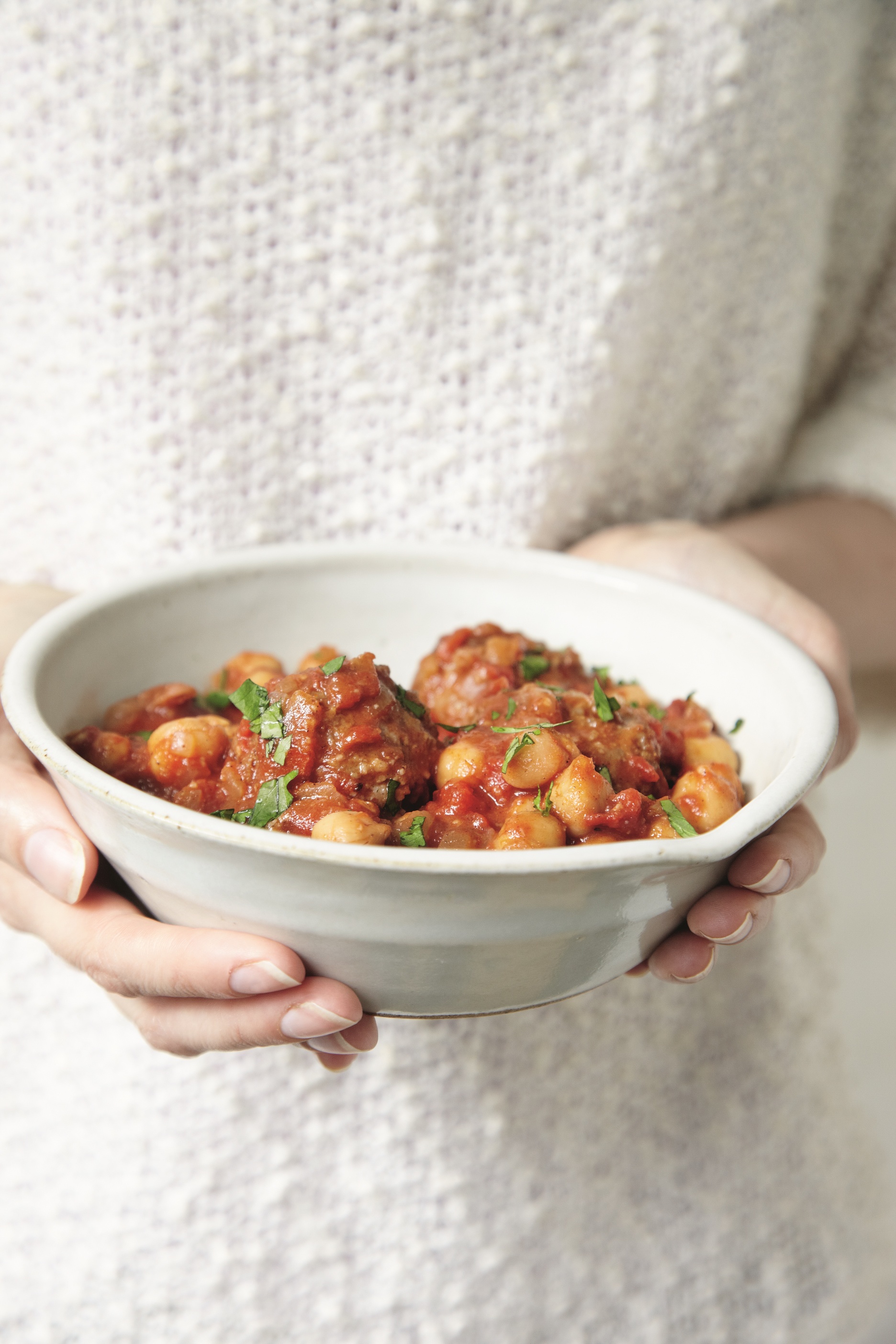
These Moroccan chickpeas with meat balls are a family hit and a great reminder to all those doubting carnivores that legume dishes don’t necessarily have to be vegetarian. Cassoulet, Chilli con carne and Boston baked beans are all classics but there are plenty of other dishes such as Pot roast pheasant with prunes and lentils to get your teeth into too.

Now I do promise that you’ll have a recipe in my next post, I have a tray of figs lurking downstairs and a wonderful recipe to prepare. Meanwhile I hope you’ll enjoy Clare Winfield’s amazing photography and excuse me for banging on about my book yet again.

The Book Launch – PULSE

Here we go, a really self-indulgent post, MY BOOK LAUNCH last night. I have to admit to the pre-party nerves, gluey mouth and a general desire to hide under a table before anyone arrived but then I had a fabulous time.

Peter and Max, and the entire team at the Riverstation were wonderfully accommodating. We obviously had to nibble at recipes from the book and so I spent a couple of hours in the restaurant kitchen yesterday morning helping prep the food. It was quite an experience, working in a busy kitchen where you don’t even know where to find a spoon.

We served smoked aubergine and Puy lentil crostini, broad bean and chorizo crostini, cannellini and parmesan frittelle with salsa verde, falafel with sweet chilli sauce, spiced tomato and red lentil soup and then, last but not least, melt-in-your-mouth black bean brownies. I may just part with one of the recipes in due course but in the meantime you may just have to buy the book!

I won’t bore you with a list of all the lovely guests, you can get a glimpse of them above (with far too many pictures of me, sorry!)  suffice to say that I was chuffed to bits with such wonderful support.

The event gave me a chance to thank, and I shall say thank again, all the truly inspirational people who helped along the way with PULSE, in particular, Emily Preece Morrison my unbelievably supportive editor at Pavilion. Georgina Hewitt, Wei Tang, Maud Eden and the truly gifted photographer Clare Winfield have made the book look stunning. So thank you, thank you, thank you. It’s often easy to forget that there’s a copy editor (the very patient and rigorous Maggie Ramsey) an indexer (Ruth Ellis- I just can’t imagine where you begin), recipe testers (with Hannah Cameron playing the starring role) and guinea pig diners involved too.

So in a couple of days when I’ve had time to gather some images together I’ll give you a bit of a sneak preview of PULSE (just go to the previous post if you’d like to hear a bit of chat).

Spilling the beans – Pulse is out!

It’s here, it’s arrived and now you can hear me telling you all about PULSE.
I’m feverishly baking black bean brownies this morning ready for tomorrow’s launch, I’ll let you know all about it later in the week.

I have loads of extra legume recipes that just didn’t fit in the book, so be prepared for some pulsating weeks ahead (and I promise to stop the puns right there – oops just noticed that I’ve called the video “spilling the beans”)

If you’d like a copy it would be great to support your local shops. Three independents that I simply love, where I know you will find Pulse, are Books for Cooks in London, Topping and Company in Bath and Papadeli in Bristol. And, of course, you can find Pulse on Amazon too.

Roasted Tomato Sauce

The fruit fairy came to visit last week and left us a huge basket of tomatoes.

We’re so lucky to have such lovely neighbours. Sacha is not only Imi’s favourite baby sitter, she’s also our guardian angel when it comes to guineas, fish, pot plants and sour doughs when we’re away. Sacha’s the only one who can sing along to all of Pete’s Adge Cutler tracks and then from time to time she drops in with a tray of bargain peaches, figs or tomatoes that she’s picked up for a song at the Sunday market. I, in turn, scurry up the road with pots of cooked dishes from my recipe testing for the latest book or left overs from the cooking classes. It’s a perfect arrangement.

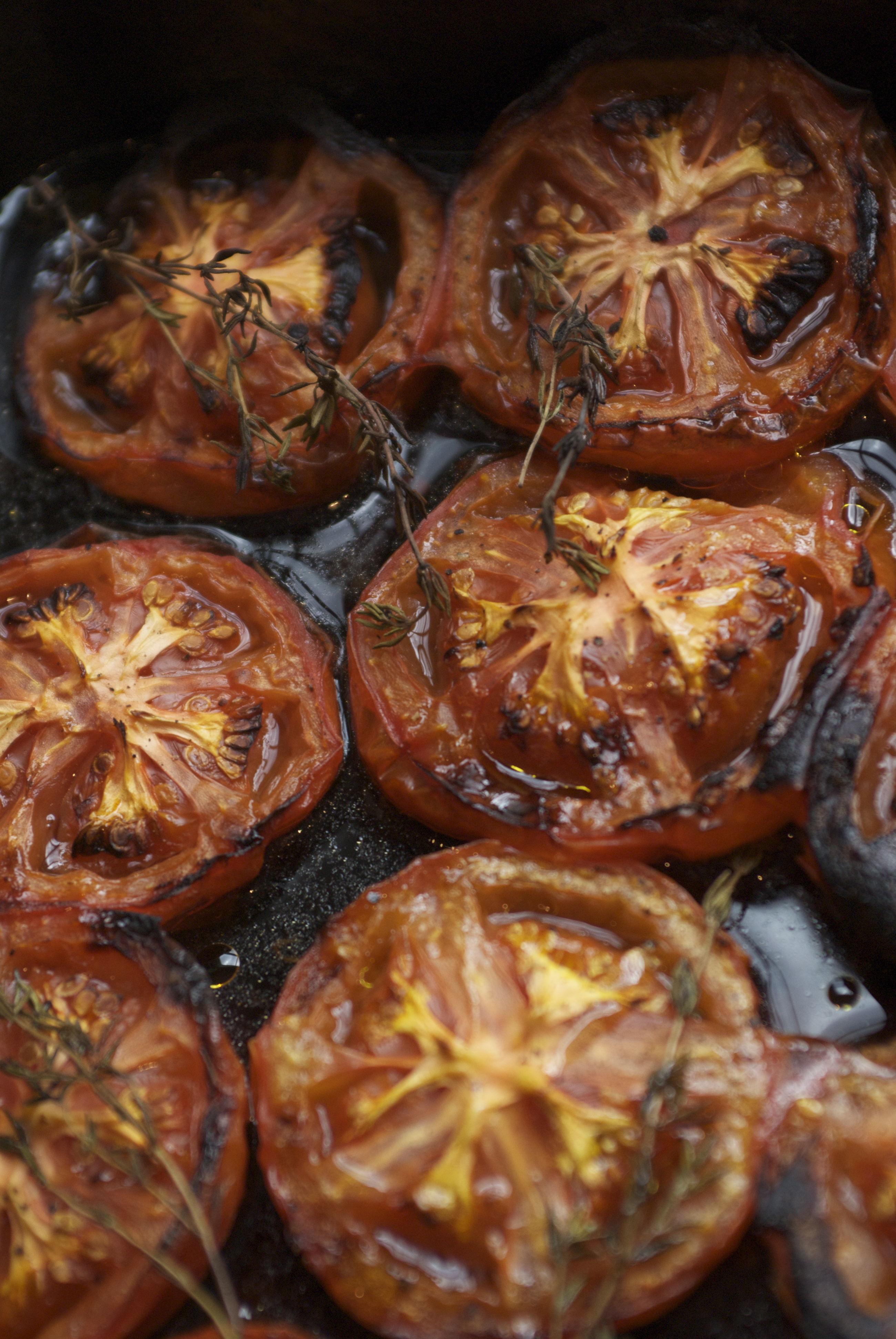
It’s tomato season right now and if you’ve got a green house (I’m very envious) you may even begin to wonder what to do with them all. It’s the only time of year when roasting up an entire tray of fresh tomatoes for a jug of sauce doesn’t seem a ludicrous extravagance.Tomatoes ready for the oven

Roasted Tomato Sauce 

About 12 large tomatoes, cut in half equatorially
1 tbsp sugar ( I love to use light brown Muscovado)
1 heaped tsp salt
A good grind of black pepper
About 8 sprigs of fresh thyme
2-3 tbsp  olive oil

1 tbsp olive oil
1 large onion, diced
3 cloves of garlic, crushed
salt and pepper

Put a couple of tablespoons of water into a roasting tray, just to stop the tomatoes from sticking. Lay the tomatoes in the roasting dish, cut side up, and sprinkle with the sugar, salt, pepper, oil and thyme. Roast in an oven at about 170 C/325 F for about 40 minutes until beginning to caramelise/colour in places.

You could just liquidise the lot at this point but I love the smooth texture you get if you push this through a good, old fashioned mouli-legumes (also great for mashed potatoes or extracting stock from prawn shells).

Now just fry up your onion until soft, add the garlic and cook until aromatic and then tip in the tomato puree. Season to taste.

Well -roasted tomatoes

And what to do with your sauce:

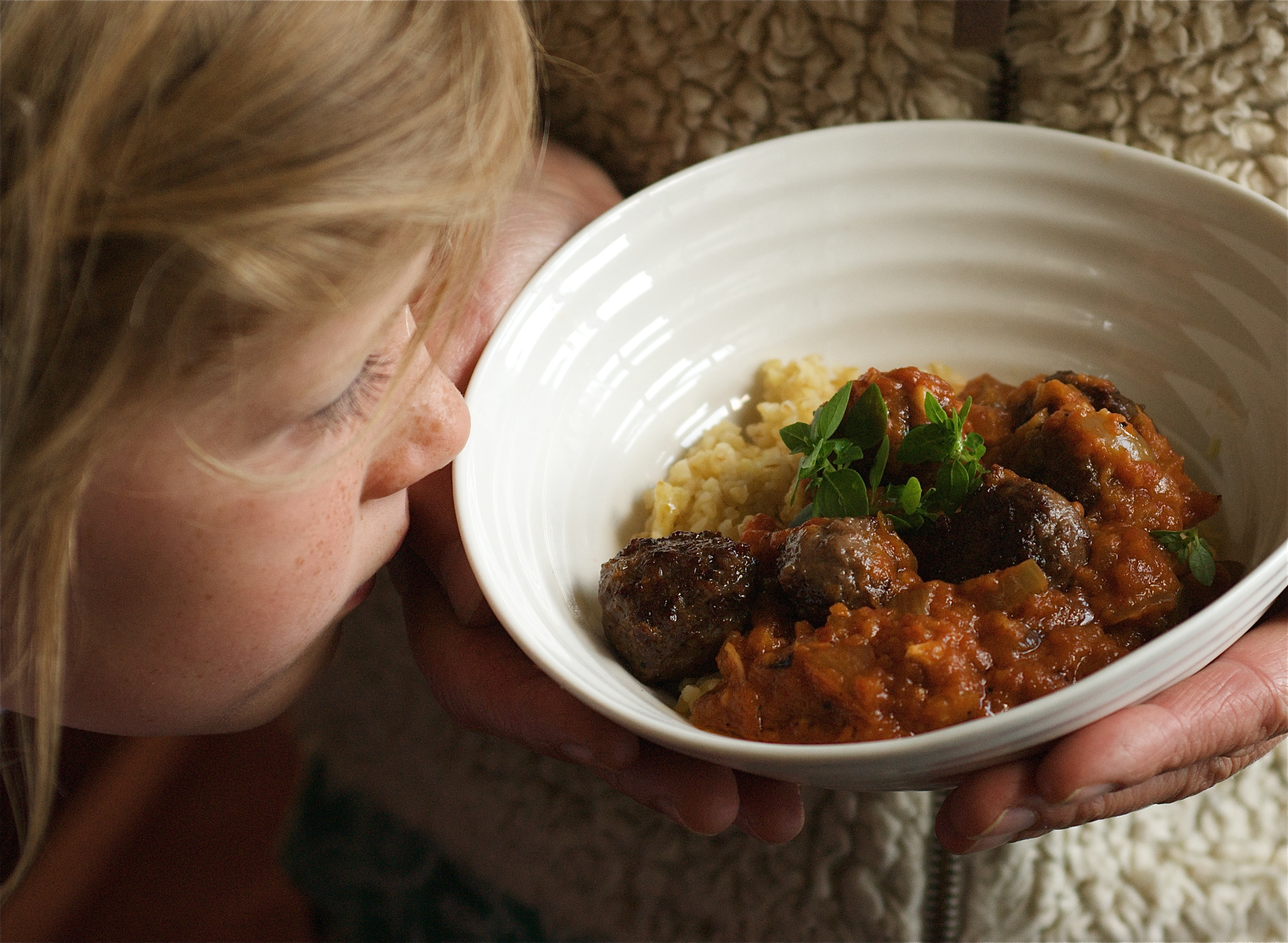
We ate some of our sauce with some simple beef meatballs, a few basil leaves and a pile of nutty bulghur wheat. Imi couldn’t keep her freckly nose out, it smelt so good.
The sauce was fabulous stirred into some cooked haricot beans (you could always use canned)
The last scrapings of the pot ended up on sourdough toast topped with some mature cheddar and flashed under the grill.
The options are endless: soup, pasta sauce, zipped up with a bit of chilli and served with sardines or mackerel.

roasted tomato sauce and meatballs

All surplus tomatoes welcome here!

Runner Bean Frittata

You could hardly call our handful of runner beans a glut but I did have to come up with a quick way to use them up before we set off on holiday. It happens every year; all the plants I’ve been tending for months are suddenly laden with fruit just as we’re going away.

These beans have some heritage too. Peter’s father Royston Bassett was one of the most positive, generous spirited men I’ve ever met, he was also the king of beans. Roysty Reg, as we all called him, grew literally hundreds of pounds of both broad and runner beans every year. “When you’ve got beans you’ve got friends” I remember him announcing as he filled his wheelbarrow for the umpteenth time. The journey home from the allotment, with the Kings Head en route (where Roysty did a great trade swapping beans for pints with his mates) was often an eventful one. He managed to misjudge the kerb once, somehow ending up underneath his upturned wheel barrow, finishing up like a giant metal tortoise. He was such a fabulous character, always up for a laugh. His antics go down in family history, perhaps my favourite is the time the Bassett family went out for a celebratory family meal. It was back in the seventies and Roysty was sporting a fashionable blue velvet jacket, purchased for the occasion. The waitress asked “would Sir like a roll?” “don’t mind if I do” said Roysty as he jumped down from the table and rolled on the floor picking up every bit of crumb, hair and carpet fluff on his blazer.

When Roysty died earlier this year, aged 91, he left a huge sack of his prized beans, dried and ready for podding. It was wonderful, as Imi and Pete podded the beans on the doorstep lots of our friends and neighbours stopped for a chat as they passed by, most of them left with a handful of beans. Roysty’s beans have gone to Spain, London and countless gardens around Bristol and I know that this sounds rather sentimental, but Roysty seems to live on through his beans.
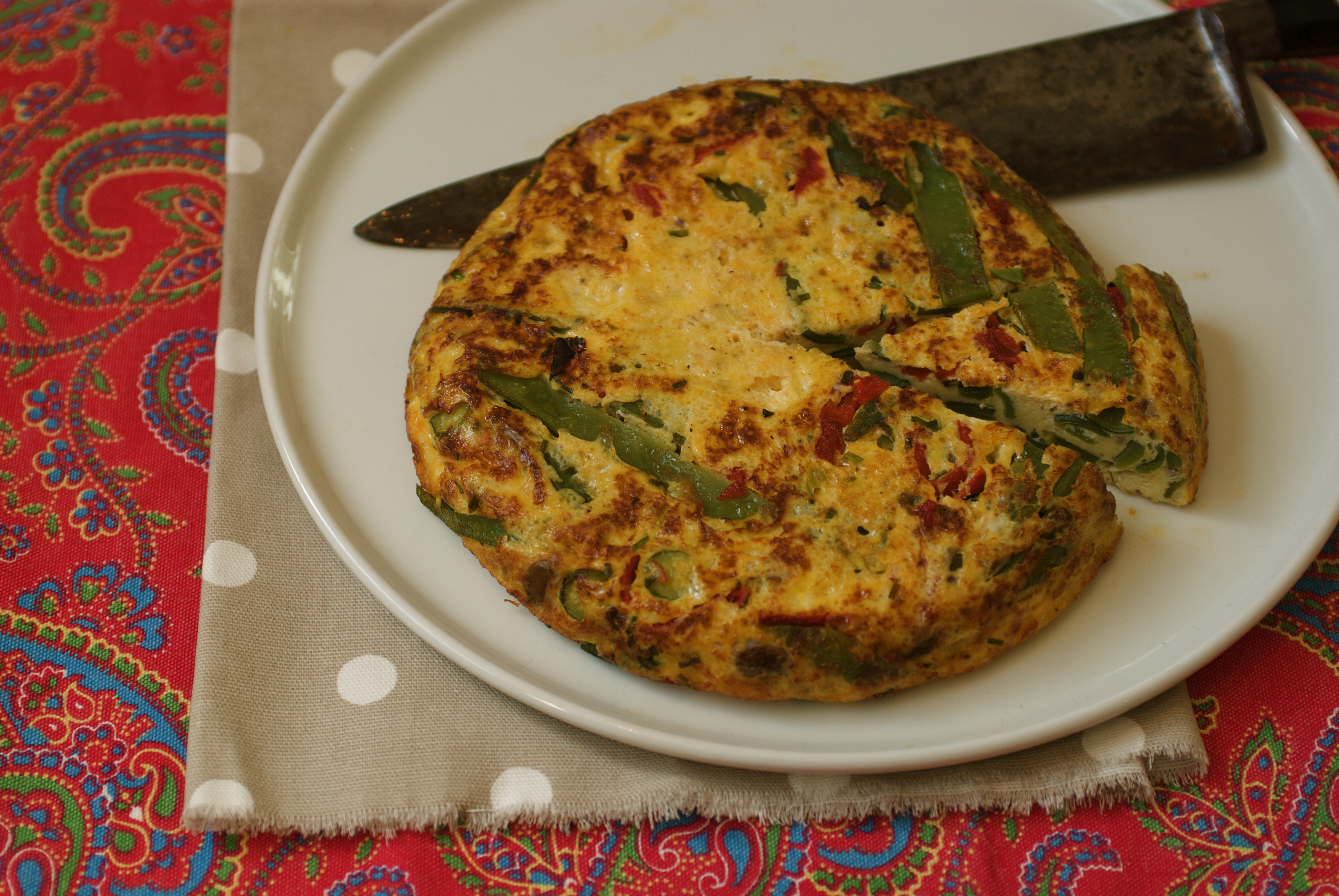
So here is the recipe for the quick lunch frittata that we dived into before heading off to very sunny Spain (more about that at a later date) It really helps to have a small, deep, non-stick frying pan. Mine is a rather expensive, but incredibly resilient, 20 cm SKK pan that I bought at Divertimenti. It’s THE perfect Spanish tortilla pan too.

Runner Bean Frittata
A handful of young runner beans, topped and tailed
2 tbsp olive oil
2 cloves of garlic, crushed
piquillo peppers, sliced ( you could use roasted bell peppers)
a small bunch of chives, finely chopped
1 tbsp olive oil
6 eggs
a dash of milk
salt and black pepper

String the runner beans if necessary (mine were very young and pretty string-free) and then blanch them for a couple of minutes in a pan of boiling water, drain and then run under the cold tap to keep them lusciously green.

Fry the garlic, piquillo pepper strips and beans in the olive oil for a moment or two until you’re enveloped in wonderful smells.

Take a bowl and beat up the eggs with a dash of milk until well mixed. Tip in the fried veg’ and season with plenty of salt and pepper.

Reheat the frying pan with an extra tablespoon of olive oil and pour in the egg mixture. Now cook over a low heat until the sides of the frittata are beginning to come away from the pan. Place a large plate over the pan (the top will still be a bit runny) and turn the omelette over onto the plate. Slip it back into the pan and cook the underside. (if you can’t bear the idea of turning the frittata you can bake it in the oven at about 180 c/350 f for about 15 minutes or until just set, but not rubbery)

Now it’s up to you, if you’re going to eat the frittata warm then it can be delicious to leave the centre quite juicy and loose but if you are planning on eating it cold later then continue to cook until the centre is set. (Just press on the top to see if the centre feels at all wobbly or insert a skewer if you’re really unsure)

Serve up with some green salad.Runner Bean Frittata

 Frittatas are fabulous for all kinds of vegetables – favourites of mine are:  courgette, mint and parmesan or caramelised onion, thyme and goat’s cheese.

And if you really do have a glut of runner beans, you lucky things, then try Diana Henry’s recipe with anchovies , Xanthe Clay has plenty of great ideas for you and do take a look at The Foodie Bugle post by Andrew Green.

Pickled Cherries

At last, here’s the cherry post that I promised you a few weeks ago. I may have missed the boat -I’m not even sure that there are any English cherries left but you could always save the recipe for next year.

I’ve often dreamt of having a larder packed with pots of homemade preserves but to be honest I rarely get around to making jams and pickles (and rather sadly I don’t have a larder either). There’s something rather domestic goddess-y about reaching for the homemade bergamot and ginger marmalade when friends pop in for tea. These cherries only take about ten minutes to make and you too could feel that sense of self-satisfaction as you whip out your hand crafted fare.

Jane Grigson’s Fruit Book has a simple recipe for French pickled cherries and I’ve just added some different spices to the mix. The cherries don’t even need to be pitted and I think that they’ll look much prettier served whole on a bit of stalk, so I just trimmed all the stalks to a couple of centimetres.

Pickled Cherries

500 g fresh cherries
500 ml wine vinegar (white or red would be fine)
300 g soft, light brown sugar
1 cinnamon stick
2 bay leaves
4 star Anise
1 tbsp fennel seeds
1 tbsp coriander seeds

Pile the cherries into a sterilised jar ( a Kilner jar is ideal otherwise you will need to place some paper between the vinegary liquid and a metal lid).

Heat up the remaining ingredients in the vinegar for about 10 minutes until the sugar has completely dissolved. Set aside the liquid in a non-reactive pan or a glass jar and leave for a few hours, or overnight for the flavours to infuse.

Strain the cooled vinegar over the cherries, making sure that they are completely submerged in liquid. Seal the lid, place in the fridge and leave for at least a week.

Pickled CherriesI have high hopes for these cherries with a pork pie or some rillettes (now there’s a recipe, I’ll share that one with you later in the year) but they should also be delicious with a bit of good cheese. I’ll let you know.

Lost in Translation – The Ultimate Holiday Menu

“Cotopus cocked to the hot plat”, “Crap salad”; there are always a few menu mis-haps to get you chortling when you’re on holiday but I’d love to challenge any of you to find a better menu than this.

I’m not sure why, but the Spanish do seem to be exceptionally good at literal translations. Pete and I visited Cazorla a few years ago. I’d often driven through the mesmerizingly endless kilometres of olive groves en route for Sevilla, Córdoba, Granada and the coast but I’d never even stopped in the Andalucian province of Jaen before. Nobody had mentioned the stunning Sierras de Segura y Cazorla National Park or the beautiful towns of Úbeda, Baeza or Cazorla.  GO THERE – You’re a million miles away from the coach loads and the tour guide mayhem of the Mezquita and Alhambra (I should know that was one of my first jobs). Now this is beginning to read like a tourist brochure and so I promise to cut the waffle and just post a load of pictures to capture the feel of the place. This was, after all, meant to be a post about menus and as usual I’ve digressed BUT, just one more thing the fabulously shady little B&B-ish little hotel where we stayed is worth checking out.
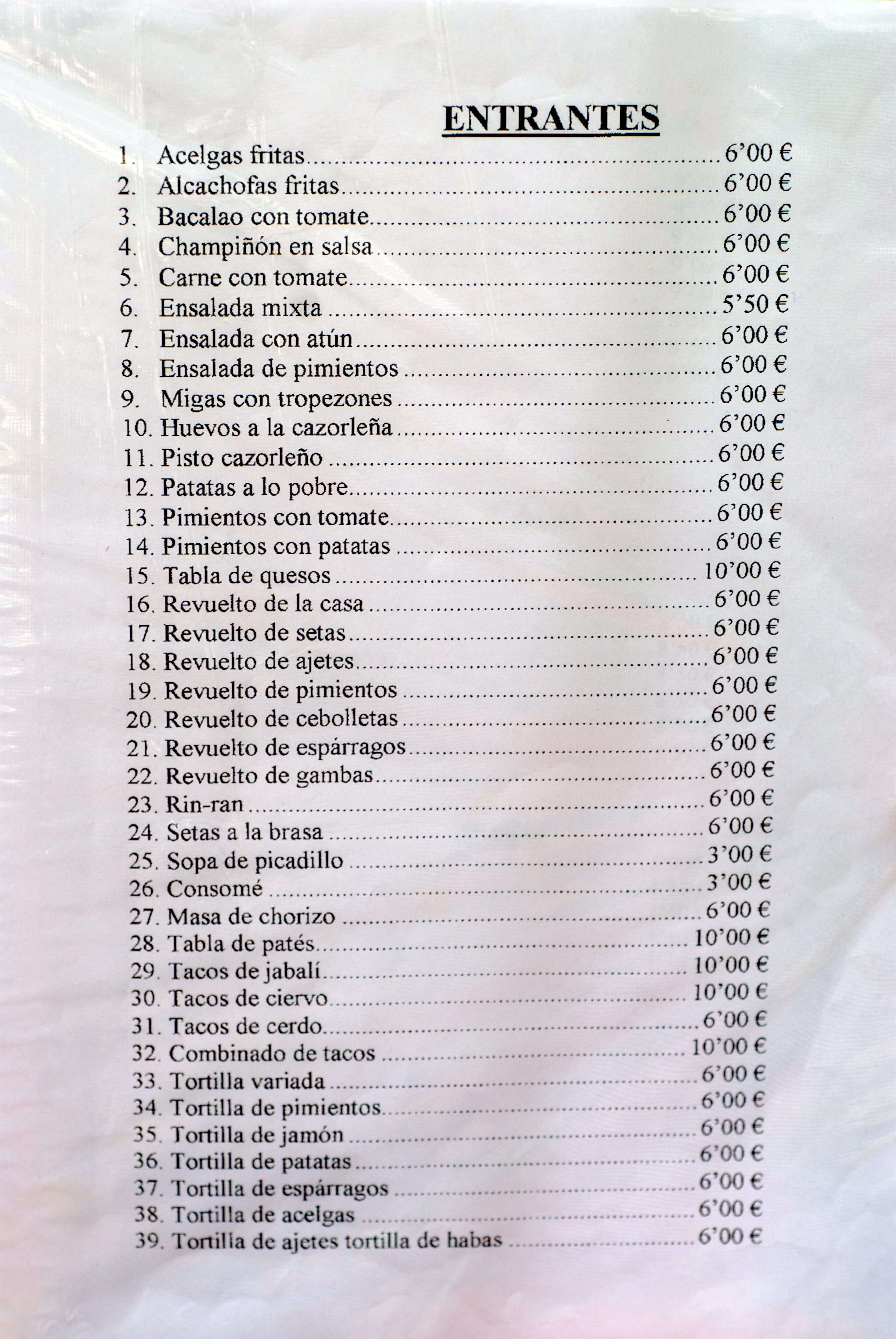
So here is the starter menu. I’d really like to draw your attention to the local speciality of  9. “Migas con tropezones” (fried breadcrumbs with chunky bits of charcuterie) and the selection of “Revueltos” 16. through to 22. (of scrambled eggs with accompaniments)

Lost in TranslationIt was all fine until Pete turned to the English menu for a bit of help. The entire situation was made worse by a very serious and exceedingly sincere waiter. Just take a look at the “Inlets” selection. Just how do you decide between the “You crumble with stumbles” or the appetising “In a mess (untidy of the house)” when there’s a  “cocktail of plugs” on the menu too?

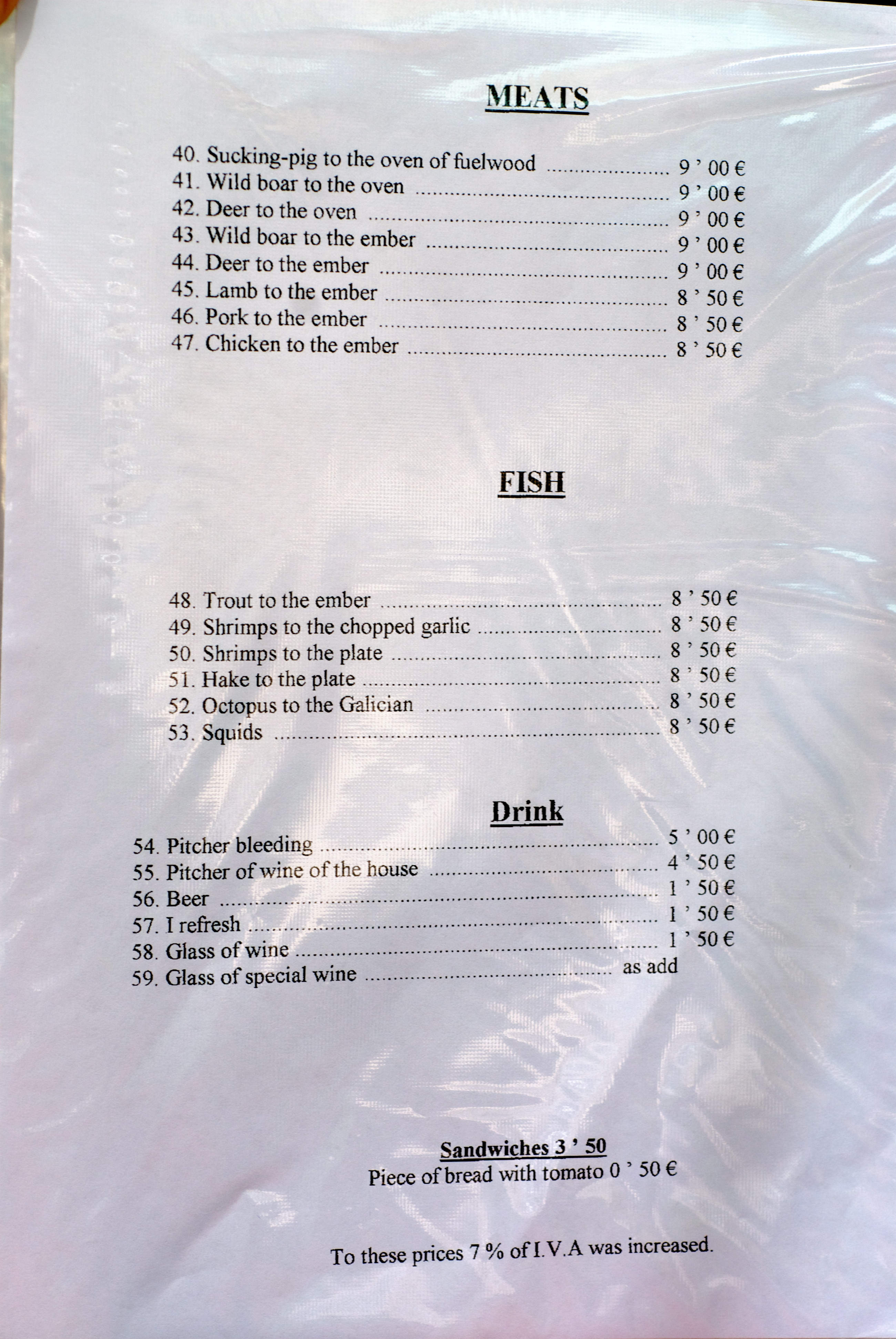
Great menu mis-translations.And, as you can see from the next page this could all be washed down with a “pitcher bleeding” before you led your “Sucking pig to the oven of fuelwood”. I’m sure you’ve all had moments when you’re delirious with laughter, nearly wetting yourself in fact. I’m just wondering whether Google Translate will ever be able to deliver such fabulous style. So please surprise me and email me any contenders you may have this summer for the best holiday menu.

More excruciating laughter pain

Here are some pictures of Cazorla too.