Author Archives: Jenny Chandler

Unknown's avatar

About Jenny Chandler

I am a food writer and cooking teacher

Rillettes and Hellebores

The hellebores are flowering outside the kitchen window, they seem to arrive in the nick of time every year just before I’ve decided that I really have to emigrate.

I know it’s a bit early to be celebrating but, after the wettest winter since British records began,  the sun shone all day yesterday.  There’s a huge damp patch on the sitting room ceiling but at least the relentless dripping has stopped and with the unbelievable sight of thousands of flooded homes every time I switch on the news, I really can’t complain. Meanwhile, Pete has been “working hard” on a whale watching trip in sunny Baja California, leaving me and Imi to batten down the hatches alone.

I’m always much more productive when Pete’s away, I sometimes even get out the sewing machine of an evening, there’s no one to offer me an Aperol Spritz (my current tipple) and more time to hatch domestic plans. So this month I’ve been on a preserving roll. I started off with marmalade but, since the Seville Oranges have pretty much been and gone, I won’t ramble on about that now (you can look at my Borough Market post in any case). My other endeavour has been to make the perfect rillettes.

When I teach bread classes at The Bertinet Kitchen in Bath there’s always a fabulous spread of cheese, salads and pots of homemade goodies for lunch (along with plenty of bread, of course). I always make a beeline for the jar of rillettes. Okay, consumed on a daily basis this fatty, pork pâté-ish mix would be recipe for a heart attack, but relished from time to time with some cornichons and plenty of salad it’s perfectly healthy and tastes superb.

Making rillettes at home is surprisingly simple, the only draw back when it comes to the traditional French technique (used by Richard Bertinet of course) is the quantity of fat. It’s not that I’ve got a problem from the calorie aspect, it’s just that most of us Brits don’t have large pots of goose or duck fat lurking around the house to cook the pork in. Nigel Slater uses no extra fat at all in his recipe- just slow roasts some really fatty belly meat by itself, I can’t ever seem to get my hands on any sufficiently fatty belly. So here’s my recipe which does use a few tablespoons of duck or goose fat, you’ll find it at plenty of butchers and supermarkets.

The pork must obviously be the best you can find. I would never dream of buying meat from a factory-farmed pig in any case, but here the distinctive flavour of slow-reared, free range pork is key. The beauty of the dish is that pork belly is cheap cut anyway and that the rich rillettes will go a very long way. My pork came from Sheepdrove, the organic butchers in Lower Redland Rd.

The recipe will make about 4 jam jars or 2 good size kilner jars.  So here you go:  It’s really just a question of assembling all your ingredients and then cooking them long and slow until everything simply falls apart.

Rillettes – 2 large jars

1 kg pork belly – bones and skin removed but ALL fat left on
1 heaped tsp of salt
2 bay leaves
8 juniper berries, lightly crushed
12 peppercorns, lightly crushed
2 sprigs of thyme
4 whole, peeled cloves of garlic
250 ml white wine
4-5 tbsp good lard, goose or duck fat (depending on how fatty your pork is)

Cut the pork into chunks (about 2-3 cm ) and then put all the ingredients into large ovenproof dish and cover with a lid. I covered the meat with a layer of greaseproof paper too as my lid was not that good a fit.  Place in the oven for 3 – 3 1/2 hours at 150 c °/ Gas 2 until really tender.

Lift the meat out from the juices and shred it with 2 forks. Squash the garlic cloves and add to the mix too.

Have a taste to check the seasoning  and add more salt and pepper if necessary.

Press the meat down into jars or pots and then, using a sieve, strain over the fatty juices from the pan.

If you are wanting to keep your rillettes for any time (and that’s the general idea, rather like duck confit) then use sterilised jars, press down the meat and juices to expell any air, melt some more goose or duck fat and tip over a thick layer to protect the meat. Keep up to 2 months in the fridge.

Serve at room temperature with sour dough toast or fresh baguette and some cornichons, pickled peppers, radishes  or any other zippy ingredients that take your fancy.

Rillettes for lunchNigel loves his rillettes with a baked potato, I stirred some into hot Puy lentils with plenty of parsley and red onion the other day and I’m also planning on stuffing some Piquillo peppers.

I needn’t have bothered with the sterilised jars, my rillettes aren’t going to be hanging around for long.

A British Celebration – Cloisters and Black Badgers

The sky feels heavy, the daylight lamp’s on and I’ve got a hot water bottle on my lap to keep warm at my desk. I’ve already drunk my daily coffee quota ( I’m trying to switch to green tea but  it’s just not happening) and I’m meant to be sorting my accounts. These are the days that I suddenly find a mound of washing to do, decide to clip the guinea pig’s nails or, once I’m finally at the computer, do a bit of “surfing”. Some masochistic streak always seems to pull me towards a blog called Manger. Envy isn’t a pretty thing to admit to, but hell, it’s unavoidable. The writer, the super-modelesque Mimi Thorenssen (oh yes, she has an unbelievably exotic name too), gazes out of the glorious pictures taken by her uber-talented photographer husband. There are teams of dreamy children, hounds to die for (I so want a dog) and the most incredible images of the rural Médoc. Even the recipes are inspiring, fabulous, and really work too. Take a peek. You’ll no doubt feel an urgent need to trade in your Tupperware for Terracotta and your M&S for Missoni, but there’s no denying it, Manger is a work of art.

But now’s the moment to get a grip. The huge basket of Seville oranges are waiting to fill the house with their fabulous wintery scent when I put on the marmalade later today. The hellebore buds in the garden are just days off bursting into flower. I’m beginning to reminisce about our fabulous visit to Lacock  in the sunshine last week and all of a sudden there seems plenty to get excited about. Right now I’m determined to celebrate all things British and where better to start than The National Trust and a bowlful of Black Badger Peas?

I’m ashamed to admit that a National Trust Membership did seem a rather middle-aged birthday present (I’m in denial), from my sister last year  but I’m loving it. The West Country is just packed with magical buildings and parks to visit, so last weekend with a clear blue sky calling we leapt into the car, proudly bearing our badge, and whistled off to Lacock Abbey (I’ve not got as far as packing the thermos and sandwiches yet, but just give me time). There’s no need for the tour guide bit now, you can find all that on the Lacock link. I’ll just say that it’s right up there with spots that I’ve traversed oceans and trekked up mountains to experience. The tythe barn, the abbey cloisters, early snowdrops and ploughman’s lunch in the pub. It’s a great reminder to celebrate what you’ve got in your own back yard.

And now to some other rather unlikely British stars – Black Badger Peas; you’ve probably never heard of them, I hadn’t until a few months ago. The fascinating thing is that we’ve been growing them in this country, along with fava beans, for hundreds of years. I came across the Black Badgers via Hodmedods, growers and purveyors of Great British peas and beans, whilst I was researching my book. Hodmedods, who are based in Norfolk, are doing a fabulous job of re-igniting our national appetite for beans. It’s easy to forget how big a role legumes have played in our national diet (think “pease pudding cold, pease pudding hot…….”). It seems bonkers that most of us are unaware that we’ve been exporting tons,  around 500, 000 tons a year I’m told, of beans to The Middle East for decades. At last we can eat British Baked Beans (yes, they even sell them by the can) along with local favas,  marrowfat peas and the evocatively named Black Badger pea. Black Badgers are also known as Carlin or Maple peas in the North of England or somewhat less glamourously as Grey Peas in the Black Country  (try the accent and they sound even more appetising!)

Hodmedod's British Black Badger Peas

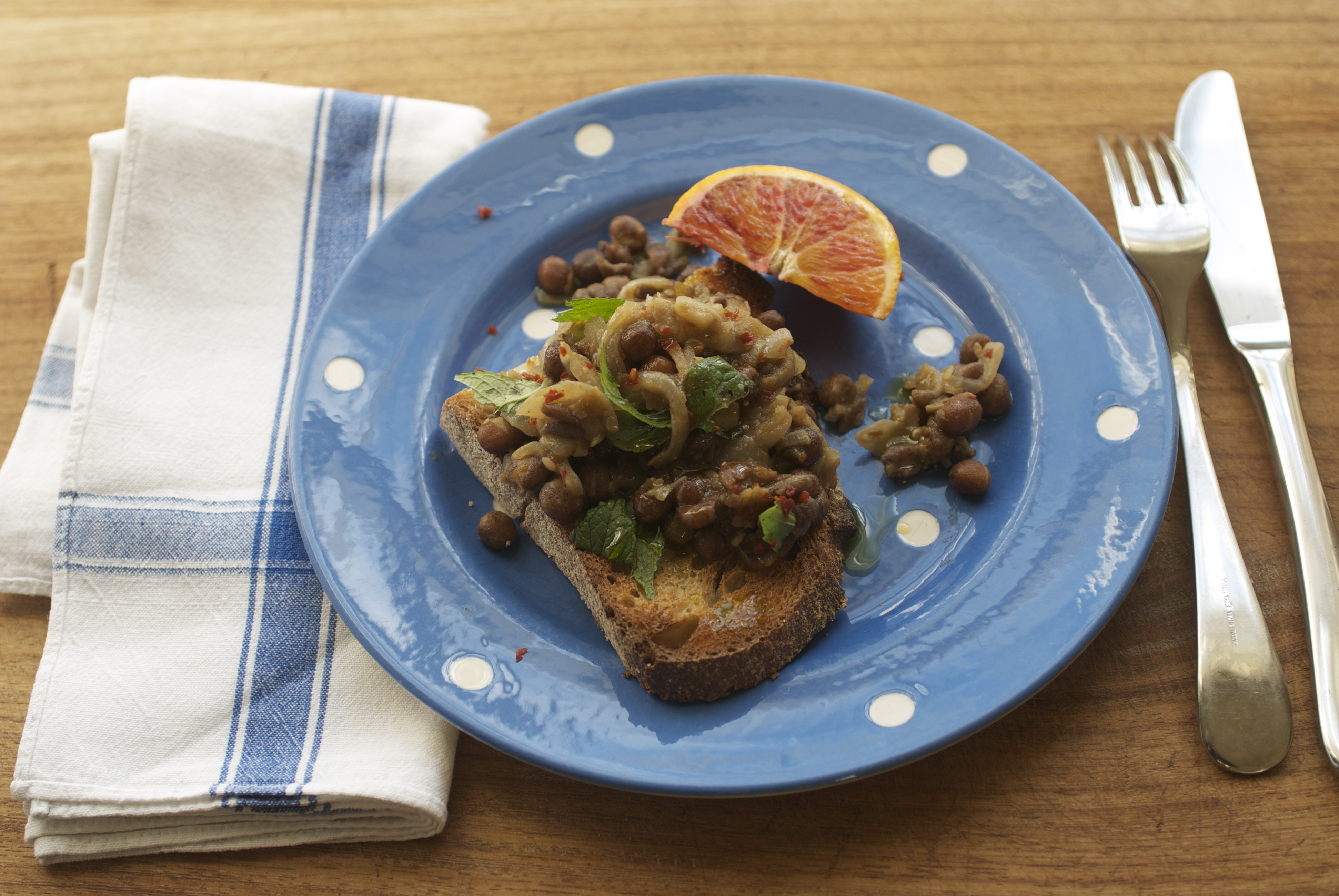
I cooked up the Badgers on a particularly dismal day last week. I’d soaked them overnight and then cooked them for about 4o minutes (remarkably quick compared to most dried peas in my experience). After a bit of an Old Mother Hubbard moment  I reverted to my default way with legumes. It’s great to have a recipe up your sleeve that doesn’t usually require a trip to the shops. So here you have a simple adaptation of the Syrian lentils from my book Pulse.

Syrian-style Black Badgers

2-3 brown onions, sliced finely
4 tbsp olive oil
400 g cooked black badger peas ( cooked fava beans, cooked brown lentils would also work well)
1-2 tsp cumin seeds, toasted and then ground
6 cloves of garlic, finely chopped
1 pinch of chilli flakes or better still 2 tsp of sweet Aleppo pepper flakes
1 small bunch fresh coriander, parsley or a few mint leaves, roughly chopped
juice of 1/2 – 1 lemon

Begin by frying the onion in the olive oil in a large saucepan, you could use a frying pan and then transfer them but I prefer to keep this as a one pot dish. Keep the temperature fairly low and allow the onions to soften, sweeten and turn gold, this may take about 20 minutes. Be patient.

Set aside half of the onions from the pan, turn up the heat and throw in the garlic, cumin and chilli. Stir and, as soon as you can really smell the garlic, add the peas and a couple of ladles of their cooking water.

Simmer for about 10 minutes, enough for the flavours to marry, stirring from time to time.
Have a taste and season with salt, pepper and enough lemon juice to really zip everything up. Add the rest of the onions and plenty of herbs.  I used mint as we had some rather moth-eaten leaves left in the garden (come on spring I need some fresh herbs) but coriander or parsley are fab’ too.

We ate our Badgers with sourdough and a squeeze of blood orange juice but they would be equally good with toasted pitta or lavash and a dollop of creamy Greek yoghurt.


DSC_9320

Peter has eaten ALOT of pulses over the years, as I experimented and tested my way through recipes, and he pronounced the Black Badger “one of his top three”(other winners to be revealed in later posts). I do agree that the entire dish was comforting and suprisingly nutty, without feeling too worthy or wholesome. Just give the Grey Pea a chance, it might not look much but it’s deeply satisfying.

Oranges are not the only fruit – Citrus fruit salad with a waft of rosemary

When did the blood orange drop its blood and become a blush? I planned to make a citrus salad this week and found myself getting all hot under the collar when I spotted blush oranges in the supermarket. Is this some poncey marketing ploy? Please tell me that they’re a slightly different type of orange, and not that “bloody” is somehow deemed too gruesome or coarse a term for your average shopper. My local green grocer, Reg the Veg, does thankfully continue to sell blood oranges amongst a fabulous range of other seasonal citrus fruit.

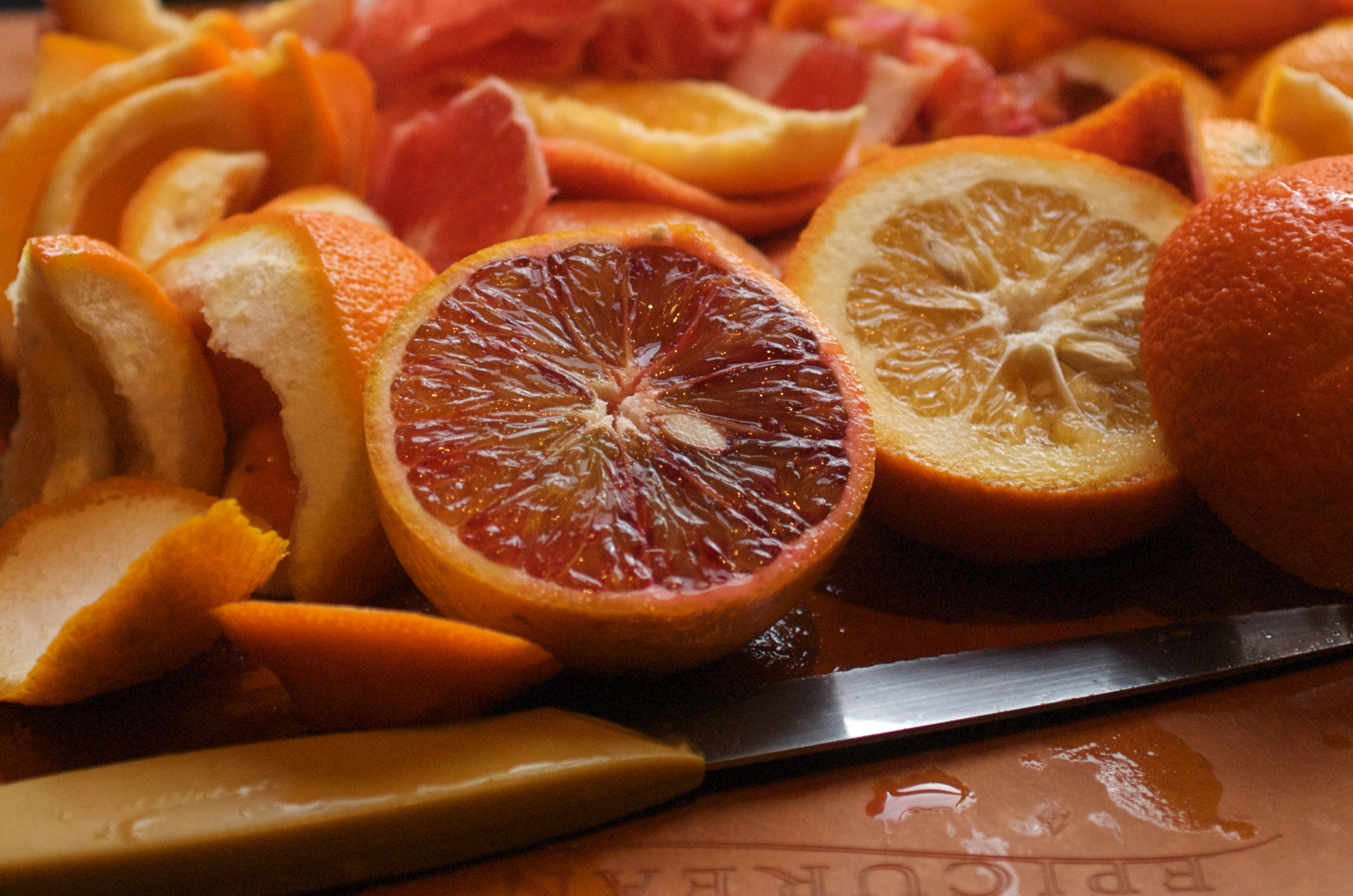
I have to confess that I’d never even heard of a Mineola or a Nadorcott before, they sound like something the Jabberwock might have gorged on, but I decided to have a citrus fest and buy a selection. I had a slightly tired looking Navel Orange languishing back at home in the fruit bowl too. I wish I could be bothered to peel them more often, once I’m over the faff oranges are one of my favourite things to eat. There’s a lady who always smuggles an orange into the sauna where I go to swim and I tell you, there is nothing better than a segment of chilled orange (she’s always very generous) in the sweltering heat and it smells pretty wonderful too. …..I resolve to use all citrus fruits before they turn blue and squashy this year. Below was the line up for my citrus salad.

Oranges are not the only fruitOn the left my well-matured Navel Orange– still suprisingly juicy and sweet.

Moving clockwise the Blood Orange – stunning to look at, bursting with intense citrussy-raspberry flavour and filled with magical anthocyanin (a powerful anti-oxidant).

Dipping down to the right we have the Nadorcott ( a seedless cross between an orange and a mandarin) – oooh easy to peel, very, very tasty and maybe my new desert island fruit

Top right, the Ruby Grapefruit that’s just that bit sweeter than your average grapefruit and looks stunning too.

Below is the Mineola,( a very juicy cross between a grapefruit and a tangerine) apparently also known as a honeybell – ever heard of one? I hadn’t either. Comes in at my number 3, after the Nardacott and the blood orange.

Bottom left is the leafy Clementine, the easiest of the lot to peel but perhaps my least favourite.

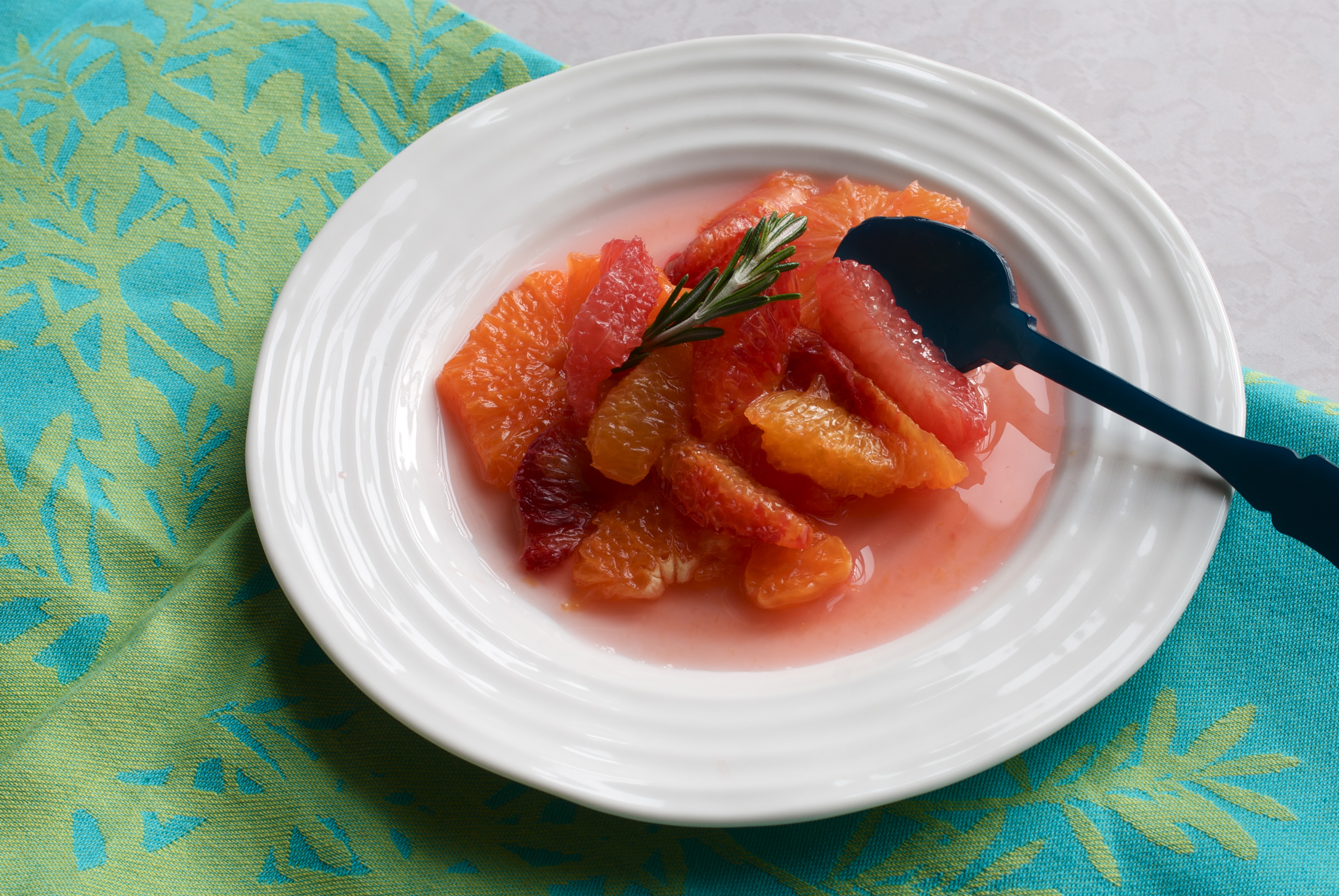
Citrus Fruit Salad and Rosemary Syrup for 4

A sprig of rosemary ( and perhaps a couple of extras for garnish)
4 tbsp sugar
150 ml water
About 8 pieces of fruit (to include at least 1 grapefruit)

Put the rosemary in a small saucepan with the sugar and water. Heat over a medium flame until the sugar has dissolved and the liquid has bubbled down to a syrup. Set the pan aside and leave to continue infusing.

Meanwhile slice the peel off the fruit. I like to cut most of it into segments; a good serrated fruit knife is definitely the best tool for the job. You can squeeze the membrane left behind to make the most of any juice. Cut a couple of the smaller fruit into “equatorial” slices to add a bit extra interest. I did add the juice from a bitter Seville orange, as you can see in the picture below it was far to pippy and leathery to cut up.

Blood and Seville Oranges

Now pour over enough of the rosemary syrup to sweeten the fruit – do taste to gauge how much you need. The rosemary should be a subtle, almost indiscernable background flavour. The combination of citrus and rosemary is divine. Try making the syrup and pouring it over any lemon or orange cake. I’m planning on making an orange and rosemary jelly too.

You might find it tricky tracking down the Nadorcotts and Mineolas but be sure to snap up some blood oranges whilst you can, their season is short. They’re great for juicing, I love them  in a Moroccan style salad with mint and black olives and Stevie Parle makes an amazing salad with mozzarella and fennel

Citrus salad with rosemary syrup


The Ethicurean Wassail & Simple Apple & Cider Cake

The Ethicurean wassail

We went a-wassailing this weekend at the fabulous Ethicurean Restaurant  (If you haven’t heard of it, where have you been? You’d better catch up with a review or two) It’s one of my favourite places not just to eat, but to be. The restaurant’s set in the old greenhouses of a Victorian walled garden, so you look out over rows of carefully nurtured vegetables with a backdrop of sweeping views out across the Mendip Hills. It’s the kind of place that I always take my Catalan friends when I want to show off; Barcelona can’t fail on the urban-cool front but when it comes to bucolic-country, we win hands down.
Supper was fabulous- You may need your reading spec’s but I’ll let you read the menu and salivate ( too fuzzy – take a look here). Ethicurean Wassail Supper

I’ve included some pictures of the food too, they’re small because I snapped them on a tiny camera with no flash but hopefully they will give you the feel. I still haven’t got to grips with taking pictures in a restaurant, it interrupts the conversation, they rarely do justice to the food and I’m usually so busy eating that I forget – So these may be my first and last. You’ll spot a “magic” black and white bean on the pudding plate, it was hidden in my toffee apple cake and so I was instantly transformed into the wassail queen.

So, after a stupendous feast we made our torch-lit trek down into the apple orchard to do our wassailing duties – to bless the trees, scare off the evil spirits and feed the robin (with cider-soaked toast) My role was to be hoisted up into the boughs  by two “burly volunteers” (ahem … their words not mine) to hang the toast in the tree. At this point I was feeling that I’d made a wardrobe faux-pas with my tomato red, down jacket (not very country -rather spoiling the idyllic rustic performance) so I was relieved to see Robin, the orchard guardian, in full fluorescent lycra. The Ethicureans are thankfully not too earnest about these things.

The ceremony was followed by a “spirited” and ludicrous Mummer’s play with plenty of flames and wafting of worryingly inflammable capes . Then back to the glass house for great music and mulled cider. Quite simply a fabulous evening.
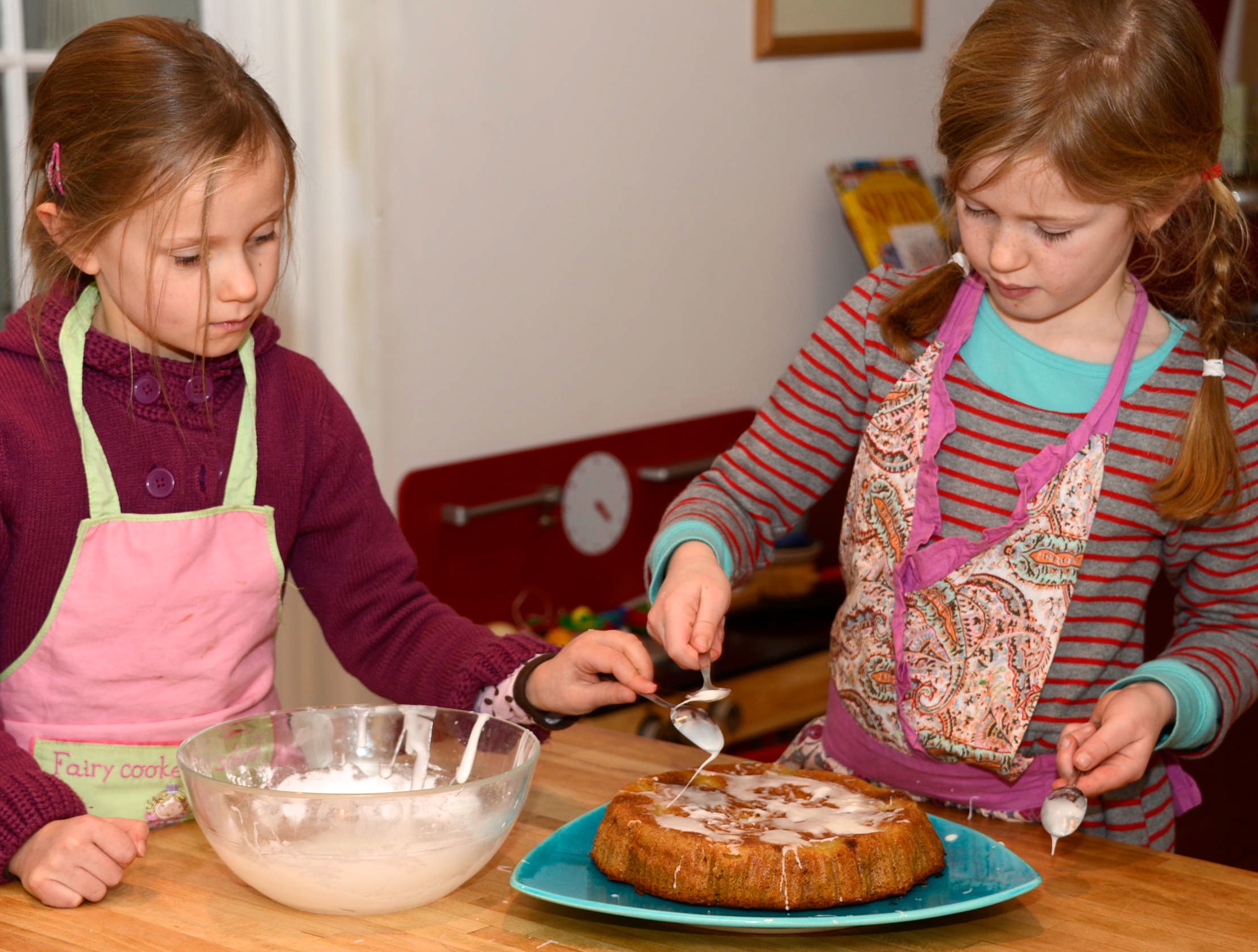
But now for a recipe as I’ve been pretty slack of late. The quickest way out would be to direct you to the wonderful Ethicurean Cookbook ( I will certainly be trying out the pear and cardamom cake very soon) but I’ll pull out the stops and give you a really simple apple and cider cake recipe of my own. So simple in fact that little Imi and her friend Freya baked this cake at the very first meeting of the Monday Baking Club.

Apple and Cider Cake
3 eating apples, peeled and sliced
½ tsp ground cinnamon
1 tsp vanilla extract
Juice of ½ lemon
3 tbsp cider
170g butter, softened
170g soft brown sugar (or a mixture of dark brown sugar and caster sugar)
3 medium eggs, beaten
170g flour
2 tsp baking powder

For the glaze
2 tbsp cider
4 tbsp icing sugar

Pre heat the oven to 190 C/375 F.

Grease a 23 cm/9 inch spring-form cake tin with butter and line the bottom with baking parchment.

Toss the apples in a bowl with the cinnamon, vanilla extract, lemon juice and cider.

Beat the butter and sugar together until light and fluffy. Gradually add the egg to the butter and sugar a little at a time, take care to beat thoroughly between additions, throwing in a tablespoon of flour if the mixture begins to curdle.

Sift the flour and baking powder together and fold into the cake mixture along with the liquid from the apple slices.

Now spread the mixture over the bottom of the tin and add the apple slices. You need not be too precious about the arrangement, as the sponge will rise up and cover most of the apple.

Place in the middle of the oven and cook for about 50 minutes until a deep, golden brown.

Spear the centre of the cake with a skewer, it should come out clean, any custardy juices and the cakes needs a few more minutes.

Leave the cake to cool a little in the tin.

Meanwhile mix together the cider and icing sugar to make a thin glaze.

Brush the top of the cake with the glaze and serve warm or at room temperature.Cider and apple cake

Happy New Year and a dollop of baked Vacherin

I’m (just slightly belatedly) wishing you a wonderful 2014 with touch of snowy, winter glamour from the 1930’s.

Granny Skating in Switzerland

We’ve been pretty holed up in not-so-sunny Bristol so I’ve delved into the album for this fabulous picture of Granny and family skating in Grindelwald, Switzerland. I’ve always loved this photo;  Gran (2nd from the left) was evidently going through a tomboy stage, whilst cricket jumpers and plus fours were quite obviously de rigueur for the chaps at the time. I was going to post a mulled wine recipe so as to accompany the picture with a bit of Swiss style but, having faffed around getting down to the writing, it now seems a little unseasonable. It’s probably fine to drink gluhwein on the slopes but it really only seems good for pre-Christmas quaffing back here.

My nod in the Alpine direction will be a box of the amazingly delicious Vacherin Mont d’Or cheese. I know that I’ll be sick of all the predictable January detox talk in a couple of weeks time, although right now I’m happily living on wintery, raw vegetable salads and frugal lentils (accompanied with Stilton   –  everything with Stilton, we only have about 2 kg to go!). But back to the Vacherin which, with just a few minutes in the oven, becomes an almost instant cheese fondue.

Hot cheese is such a guilty, artery-clogging pleasure and thankfully this is just worlds apart from the deep-fried Camembert that used to turn up on every pub menu with sickly jam alongside. I never really got it, frying an already fatty indulgence, a bit like the Glaswegian battered Mars Bar – or was that a myth? (Naughty Nigella certainly includes a deep fried Bounty Bar in her book “Nigella Bites” – ooh I just couldn’t)

I’d plump for a French rather than Swiss Mont D’Or  (the cheese is produced in a region straddling both countries) as the French version is often unpasteurised, look out for “lait cru”, and the cheese has much more tang. The small 1lb /450g ish cheese comes in it’s own little wooden box, rather like a Camembert minus the waxy wrapping paper, since in this case contact with the spruce container flavours the cheese as it matures. So you’re ready to go, no washing up, you already have the box to heat up and serve the cheese in.

So, fire up your oven to around 200ºc /Gas Mark 6 . Slice up a clove of garlic. Take the lid off the box and make a few slits in the top of the cheese, slip in the garlic and splash with a few drops of wine. You could add a few fresh thyme leaves now too. Put the cheese in the pre-heated oven for about 15 minutes and then bring to the table and devour. This is seriously moreish but with plenty of good bread, some new potatoes (I love Anya or Pink Fir Apple) and maybe a few cornichons to dunk and dollop it will make an indulgent starter for 4, or a serious blow-out for 2. Lie back and watch your cholesterol hit the roof – you could always have a great big green salad to follow.

(It’s wise to wrap the bottom of the box in a bit of foil whilst it heats through, just in case of leaks)

Almost Instant Homemade Presents

DSC_9202_2I’m not about to spend the next paragraph grovelling about, or apologising for, my lack of blogging over the last month – life just got a bit chaotic.

I went to lots of food festivals where I demonstrated bits from the book. Everything went well bar one event which actually lived up to a recurring nightmare of mine. For years I’ve had this wierd dream where I’m cooking in front of a huge crowd but don’t have any ingredients. I’m basically treading water until the food arrives, but it never does. It’s a variation on the exam-that-you-forgot-to revise-for or the driving-test-with-a-locked-steering-wheel nightmare (surely you have those too?). Well, back in November I rocked up to do a demo, was introduced to an all time writer/heroine of mine, Elizabeth Luard, spent perhaps a little too long chatting and then popped over to check my ingredients at the demo theatre. NO INGREDIENTS. Miscommunication, I was meant to bring them. AAArgh! I felt like I was on some speed-shopper reality TV show with just 35 minutes in a small town, on a Sunday morning (just to make it worse), in which to assemble my ingredients. Well,  I have to say it was miraculous and the local CO-OP did me proud : pomegranates, limes, lentils and most of the other bits too. My fabulous assistant conjured up black pudding and coconut (not for the same recipe) from some of the festival stalls and I was on. I aged about 10 years in a morning.

The last couple of weeks have been all about festive cooking classes, to such an extent that I feel like Christmas must surely have been and gone by now. I’m taking a slightly alternative approach this year as I’m cooking for a crowd and have decided to abandon the big bird altogether. It’s hard not to feel rather smug as my duck legs are gently, very gently, cooking whilst I’m writing at my desk upstairs; I’m making confit. The idea is that I won’t have to be up at dawn to get the turkey in the oven,  I’ll have loads of space for spuds, parsnips and whatever else takes my fancy and I LOVE confit. I just hope that no one will miss the drum roll moment of the great golden bird being brought out of the oven, Pete certainly won’t miss the carving. I did have fun tracking down my 2 kg (yes, 2 kg) of duck fat but I’ll report back on all of this, with a recipe and a verdict  after the big day.

Now it’s a question of presents and I do really like to give people gifts that involve a little bit of personal input. Imi has been making biscuits for her teachers (I loved her labels including the £20.99 price tag) and pickled lemons for her granny; you can find the recipes and a bit of chat on the Borough Market Blog.

My almost instant gifts (sorry I’ve taken a few paragraphs to get here), are re-potted hyacinths. There are some fantastic tins, bowls and mugs around that would make great presents particularly when planted up with a beautiful hyacinth. You can even go green and do a bit of recycling. I have a fixation with stunning food packaging and keep any old tins especially the traditional syrup and treacle tins. It’s just a matter of a trip to a garden centre or plant shop where you can buy the bulbs and some extra potting compost and then tracking down some great pots. The old tins do look fun but I also fell in love with the Indian enamel beakers, you can get them directly from NKUKU but I found mine in The Better Food Company on Whiteladies Road in Bristol. So, even if you’re as disorganised as I am you still do have time to make a great little present.

Potted Hyacinths


Tracking down your pulses

I was recently talking and cooking at the wonderful Topping and Co bookshop in Bath and a number of people asked where I would recommend buying my pulses locally. So here’s a list of fabulous shops and suppliers that are really worth checking out. My list will naturally reflect the fact that I live in Bristol but I’d love you to send me any of your suggestions so that I can add any must-visit shops to the directory.

A Bean stall near Salamanca, Spain

A Bean stall near Salamanca, Spain

Bristol

Sweetmart on the St Marks rd in Easton is an Aladdin’s cave where you can find dozens of different pulses, particularly the Asian varieties. You can also find amazing fresh produce. I always stock up on curry leaves, baby aubergines, cashew nuts and spices whilst I’m there.

Wild Oats  on Lower Redland rd, just off Blackboy Hill in  is a fabulous place to get loose legumes of many types, great for natural tofu and tempeh too. They stock British pulses from Hodmedods too – but more about them in the online section.

Papadeli quite possibly the best deli EVER, on Alma rd (by the Clifton Down Shopping centre) has a small selection of top end pulses including my all time favourite Spanish chickpeas from Burcol. These creamy  “lechoso” chickpeas are to die for. If you’re in a hurry you can also buy the jars of cooked Spanish legumes here too

Scoop Away is one of the great independents on the Gloucester rd with a very good selection of loose pulses.

Bath

– I need some more help on Bath, so please give me your suggestions, but thank you Lydia Downey for letting us know about this one.

Nada Mart, in Oldfield Park apparently sells plenty of pulses amongst the Halal, Arabic, Indian, Asian and Turkish foods.

La Bottega – Are mainly a wholesale concern but do have a small shop ( ask as some things may be tucked around the back) with an amazing selection of pulses. A few Bath dwellers have tipped me on this one. You can look at Hannah Cameron’s comments in the replies below.

Supermarkets in General

It’s great to see more and more pulses on the shelves in our supermarkets. Waitrose and the Co-Op seem to me to have very good ranges whilst a lot of the bigger supermarkets seem to vary greatly according to the local neighbourhood. Don’t forget to look in the ethnic selections in the bigger supermarkets, and not just in the wholefood area.

On line/ Mail order etc

Pulses are pretty heavy so carraige costs can be high but if you are after a particular bean it may be a price that you’re prepared to pay. It’s also worth buying a good selection as many companies have a flat delivery fee.

Ocado have a pretty comprehensive selection of legumes so that it may be worth stocking up or adding them to a large grocery shop

Brindisa stock a fabulous selection of dried and cooked Spanish pulses and you could always snap up some other goodies such as Piquillo peppers at the same time.

Buy British

Well, who would have thought that we export thousands of tons of Fava beans to the Middle East every year? I had no idea until I chatted to the guys at Hodmedods on the Norfolk/Suffolk borders. Hodmedods are now selling English Favas and many delicious varieties of dried peas to the home market. I know that packaging shouldn’t really matter, BUT IT DOES, just take a look at their beautiful boxes and each comes with a stunning little recipe leaflet.

Hodmedod's British Black Badger Peas

Hodmedod’s British Black Badger Peas

Now your help please, if you know of some fantastic supplier that I’ve left out.

Calling all West Country legume lovers

You really can’t escape me around the West Country over the next few weeks –  I will be talking, cooking and teaching pulses all over the place and would love you to join me.

So, for all you pulse enthusiasts (and the doubters too – I’m sure that I’ll convert you) here is my round up of events

1 pm Saturday 26th October –  1 hour master class  at The Bristol Home Food and Drink Show 

1 pm Sunday 27th October– a demo at the wonderful Dartmouth Food Festival

2 pm Sunday 28th October– “Have Fork, Will Travel” In conversation with Christie Smallwood  at the Dartmouth Food Festival

7.45 pm Friday 1st November– A  talk about my book, with some cooking too, at my favourite book shop Topping and Co in Bath

8pm Thursday 14th November – a fundraising demo for the Hotwells Primary School PTA, but open to the public, please contact me for more info.

10 am Saturday 16th November a Hip Whole foods  a full day, hands-on cooking class at The Bertinet Kitchen in Bath.

I will, of course, ensure that I have plenty of books to sign and sell at all these events should you be interested!

For more info on other classes I will be teaching in the next couple of months please take a peek at my website  for classes in Bristol, at The Bertinet Kitchen for classes in Bath and Divertimenti  for London classes.

Quick Quince Paste – Membrillo

I still have a mound of quinces in the kitchen and today I’m going to fill the house with the unforgettable perfume of their bubbling sugary paste. The firm jelly, Membrillo  (or dulce de membrillo  in Spanish – membrillo just means quince – let’s get pedantic!), is perfect with Sheep’s cheese, the best known being Manchego.  I love it with lots of other cheeses too especially anything blue. The Italians eat their version, cotognata, chopped into cubes as little sweeties. The Portuguse add a little dash of port with a pinch of cinnamon and call their quince paste marmelada (a quince is a marmelo and so there, apparently, is the origin of marmalade) Now I’m rambling as usual and I’d promised myself to do my first quick post ever. So here it is – a recipe from my first book The Food of Northern Spain which, rather conveniently has a beautiful picture of the quince and the paste on the cover. Jean Casals is a master of food photography and so I’ll happily use his image here instead of trying to cobble something together myself.Membrillo

My recipe is very traditional except for the last little section – the microwave tip! Now my microwave is usually reserved for melting chocolate, butter and perhaps re-heating a soup but I decided to give this shortcut a stab a few years ago and now, unless I’m making catering quantities of membrillo, it’s my foolproof method.

Dulce de membrillo

1 kg/ 2 lb quinces
750 g / 1 ½ lb sugar- approximately (see method)

Wash the quinces and wipe off any of the  suede-like down  but leave the skin on. Now remove the core and cut the fruit into small rough chunks. Don’t worry about the fruit discolouring your paste will be a deep rusty brown by the time you have finished.

Place the fruit in heavy pan with about 300 ml/½ pint water. Boil the quince until it softens, about 20 – 30 minutes and then strain off the water.

Now you need to make a puree, and by far the best piece of equipment for this is the mouli-légumes, (or pasapurés as it’s known in Spain) as you want to leave all the skin behind. You could use a potato masher and then push the puree through a fine sieve but it would be a lot more faff and your mouli will always make the best mashed potato in the world so it’s worth the investment.

Now weigh the puree and add an equal weight of sugar.

Cook really gently until the sugar has dissolved and then turn up the heat and boil until the mixture thickens. This will probably take at least an hour of fairly constant stirring, so have a relay organised and just make sure you have good oven-gloves and wear long sleeves; the hot jelly spits like volcanic lava. The puree will thicken up and turn deep red and the spoon will virtually stand up by itself.

Now spread the paste out in a layer about 3 cm/1 inch thick in a tin about 20 cm/ 6 inches square,  lined with greased paper. Allow to set for about 12 hours.

& now for the life’s too short microwave method:

Once you have your fruit puree mixed with the sugar, then place it in a deep glass bowl, with plenty of room for expansion as it will bubble up quite a bit.Cover with microwave cling film. Now microwave on medium for 10 -15 minutes and then give it a stir (take great care it could give you a nasty burn). Repeat the process 2 more times until the paste is really dark and thick. You may need to increase or decrease the time a little according to your microwave. Tip out onto the greased paper as before.

And just a couple of ideas:

* You can make the paste with apples too – I came across a dulce de manzana in The Basque Country, served with local Idiazabal cheese. Use the same method but add just 100g more sugar. I made some last year, using eaters rather than cookers and it reminded me of the deeply appley-caramelised flavour of Tarte Tatin.
*I’ve just discovered this Ottolenghi recipe that I will just HAVE to try : Membrillo and Stilton Quiche.  Aargh mouth’s watering – I need to go for some lunch.

Roasted Quince with Bath Blue Cheese & Lentil Salad

Last year I spotted a quince tree, laden with fruit in a Bristol garden as I parked up my car. Quinces are mysterious things; they’re too hard and too sour to consider eating raw. You can’t even whip up a tart or a crumble as you might with an apple because the flesh takes so much longer to soften and mellow. So, many a forgotten quince languishes, unloved on a tree in this country until it rots and drops. I posted a note through the door of the house where I’d eyed them up, offering some cash and even a good slice of membrillo, but never heard a thing.  This year I got a message from some wonderful friends Mike and Viv in Bishopston who offered me a few of theirs. I jumped at the chance, grabbed my basket, slipped on my quince-yellow top (who can miss a photo opportunity?) and set off.

Mike was ridiculously generous and I finished up with at least a dozen quinces. They’ve been sitting in a bowl filling the kitchen with their unforgettable perfume and looking so beautiful that I could barely bring myself to cook them. You can see why they are reputed to be the original golden love apple of Aphrodite.
I’m going to make some membrillo (the solid quince paste that the Spanish love to eat with cheese – particularly Manchego) later in the week, but yesterday I baked a few of the fruit until deep coppery red and as  tender as a canned pear.Quinces perfuming the kitchen

Baked Quinces

100 g butter
4 heaped tbsp of soft brown sugar
4 medium quinces
1 stick of cinnamon.

Now these really couldn’t be simpler. Pre-heat the oven to a medium temperature around about 170º C. Place a heatproof dish in the oven with the butter and sugar just to melt and dissolve a little.
Meanwhile peel and quarter the quinces (unless they are very tiny and you might like to leave them in halves) I used my trusty melon-baller to remove the cores but you could just use a knife.

Take the dish from the oven and roll the fruit around in the sugary butter. Add a stick of cinnamon  and then cover tightly with foil. Put back in the oven for 2-3 hours until the fruit is really tender and a deep brick-red. It’s wise to take a peek at hourly intervals just to check that there’s a bit of moisture in the dish, your packaging may not be as steam-tight as you think. Just add a slosh of water (or wine/Masala) if it’s looking rather sticky and dry – you musn’t let those precious juices burn.

Eat warm or cold.

Baked quince with cinn

And what to do with those baked quinces:

I would always recommend baking a few quinces at a time and then using them in all sorts of different ways. Play around with the flavours adding any, but not all, of the following : vanilla, star anise, wine, port, Creme de cassis, honey or maple syrup.

*Serve warm with clotted cream, Greek honey with yoghurt, vanilla ice cream or rice pudding.
*Add some cooked quince to an apple pie or crumble – about 1/5 quince to 4/5 apple (it’s quite a strong flavour)
*Stir into a simple lamb tagine instead of apricots – I’ll type up my favourite recipe sometime but here’s one to keep you going from Jill Dupleix. Just add roasted rather than poached quinces.
* Serve with a blue cheese and lentil salad as I did at The Great Bath Feast.

Baked Quince, Bath Blue and Lentil Salad (serves 4)

1 x simple lentil salad (below)
1 baked quince ( as above), diced into 1 cm squares
200 g Bath Blue cheese, or any creamy cow’s milk blue
1 handful of walnut halves
2 sticks of celery, finely sliced
100 g watercress

Carefully stir about 2/3rd of your quince, blue cheese, walnuts, celery and watercress into the lentils. Be gentle you don’t want the cheese to collapse and make the entire salad look milky.

Spoon onto individual plates or onto a large serving platter and sprinkle over the remaining ingredients.

The Basic Lentil Salad (from my new book PULSE)

250 g/9 oz Puy, Castellucio lentils, or other tiny green lentils – rinsed
1 bay leaf
1 small red onion
2 tbsp red wine vinegar
4 tbsp extra virgin olive oil
1 clove of garlic, crushed
salt and black pepper
4 tbsp flat leaf parsley, chopped
Place the lentils in a pan with the bay leaf and cover with cold water by about 5 cm/ 2 inches . Bring them up to the boil and then simmer for about 20-30 minutes until tender but still intact.

Pour the vinegar over the red  onion and leave to soak. The onion will turn fuschia pink and become softer in both texture and flavour.

Drain the lentils, reserving their cooking liquid, and whilst still warm add the vinegar, olive oil and season well with salt and black pepper. Once cool stir in the chopped parsley and add a little cooking water if the salad seems dry.

And -you can of course use this basic lentil salad as the base of dozens of variations eg beetroot and feta, chicken and avocado, Piquillo pepper and Montenebro goat’s cheese. The best place to look for these ideas is without a doubt (you guessed it) my new book!

If you came to my demo on Sunday in the great Bath Feast Pavilion then you may be wondering about the chickpeas too. You can go to the fabulous Borough Market blog (I teach there too) and just add a bit of Orchard Pig cider to this recipe.